

Look at all the new cars coming out, and you might wonder whether the entire car industry has agreed to build the same SUV, then spent several million pounds arguing about the headlights. The Paris Motor Show offered rather more to get stuck into.
There were still plenty of SUVs, of course, but also small electric cars, some ambitious charging promises, and a collection of concepts suggesting that designers might have been allowed out of the crossover department.
Familiar names returned to familiar territory, unfamiliar names hoped to become household ones, and there was enough talk of intelligent cars to make you wonder whether the driver is still required.

We headed to the Paris Motor Show to see what’s coming. These are the cars, ideas and manufacturers worth knowing about, whether you’re planning your next purchase or just want something interesting to look forward to.
Smart gets back to being small
The most appealing idea at a motor show doesn’t always need four motors, a cinema screen, and enough battery capacity to power a small town. Sometimes, it’s simply a small car that stays small.
The new Smart #2 brings the brand back to the compact two-seat format that made its name. At just under 2.75 metres long, it’s a welcome reminder that an urban car doesn’t need to occupy the same space as a tennis court.

Smart is promising a UK starting price below £20,000, a target range of up to 180 miles and a turning circle of under seven metres. A rear-mounted electric motor drives the rear wheels, while a 35.8kWh battery supports a claimed 10–80% rapid charge in 20 minutes.
It’s refreshing to see a brand doing what it does best: two seats, decent electric range, and a footprint suited to where it’ll actually be driven. That will matter more to many than another enormous family SUV.
Small electric cars are becoming a proper choice
Smart isn’t alone in rediscovering the smaller end of the market. Dacia unveiled a second-generation Spring, based on the forthcoming Renault Twingo and promising an entry price below €18,000 (£15,200). That isn’t a confirmed UK price, but it suggests that the target is electric transport that doesn’t require a lengthy conversation with your mortgage adviser.
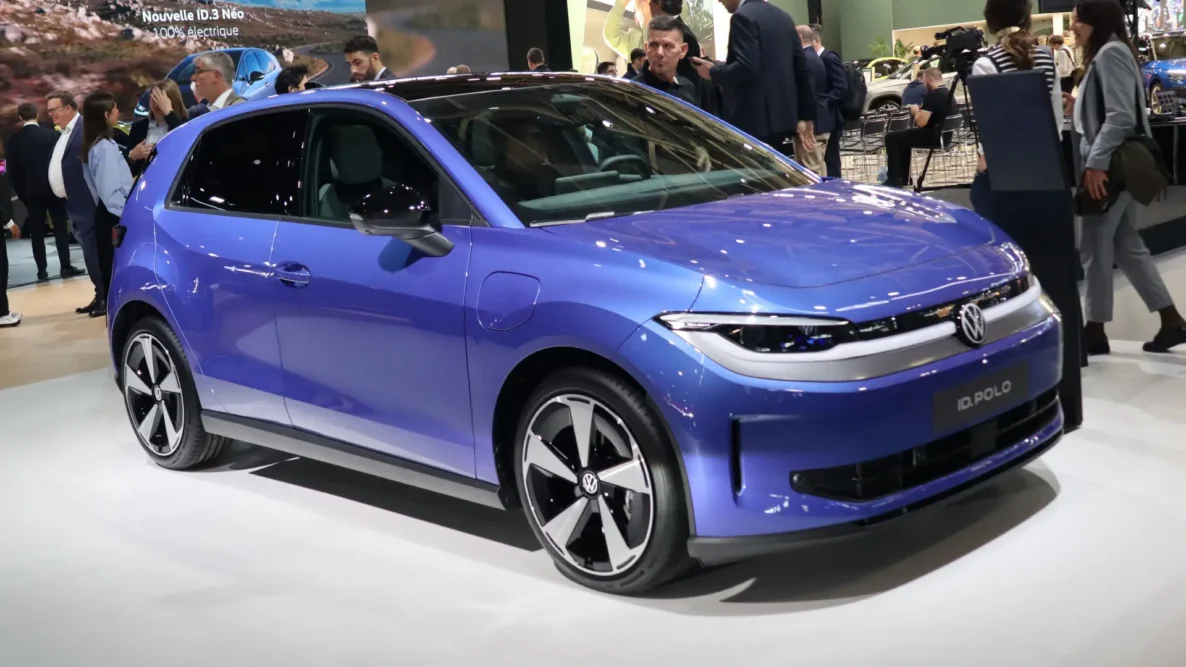
Volkswagen Group, meanwhile, brought together the Cupra Raval, Volkswagen ID Polo, Skoda Epiq and Volkswagen ID Cross. The two hatchbacks and two SUVs share the same underlying platform and electric technology, giving buyers a choice of shapes and badges without requiring four entirely separate engineering projects. Good for Volkswagen, as it keeps costs down, but will they feel different enough to make choosing between them worthwhile?
Leapmotor’s new B03 adds another contender. Due in the UK in early 2027, the electric supermini has some interesting practical touches that go beyond another large touchscreen. The rear seat bases lift up to accommodate taller items, the front passenger seat folds flat, and a 90-litre waterproof underfloor compartment provides somewhere for muddy equipment. Anyone who has transported wet walking boots might appreciate that more than a dashboard light show.
Fiat remembers the family car
Fiat’s Paris stand offered plenty of theatre, including the Multiplay concept, which transforms from a family vehicle into a pickup. We’ll come back to that in our look at the show’s more imaginative creations.

The more immediate news was the Grizzly and Grizzly Fastback, two family cars due to reach the UK in summer 2027, with orders expected to open earlier in the year.
Both measure less than 4.5 metres long, with the Grizzly prioritising practicality and the Fastback adding a more swept-back profile. Both have a pretty big boot — they’re sensible family cars, after all — and the range will offer petrol, hybrid and electric power.
Dacia is also expanding its family-car offering with the Striker, a new Qashqai-sized crossover intended to sit alongside the boxier Bigster. It starts at around £25,000, showing the familiar Dacia intention: more car for less money.
Neither brand needs to reinvent family life. Sensible dimensions, usable luggage space and a price people can contemplate would be a decent start.
BYD wants charging to stop being the talking point
At the other end of the size spectrum, BYD’s new Atto 8 is a seven-seat electric SUV measuring just over five metres long. It has a 115kWh battery, a claimed range of up to 405 miles and a 775hp all-wheel-drive version, because apparently the school run requires supercar performance.
The more consequential claim is charging: BYD says its Flash Charging technology can take the battery from 10% to 97% in nine minutes. That’s not enough time to pop into Greggs for a coffee and sausage roll.
Ok, getting those sorts of speeds needs the right charging equipment and conditions, so don’t expect your nearest motorway charger to suddenly deliver the same result. Even so, it points towards the question manufacturers increasingly need to answer: how much should charging actually interrupt your journey?
Alongside the flagship, BYD also showed a five-seat version of the little Dolphin Surf. That’s a less spectacular development, but could be equally useful to buyers who need an occasional fifth seat.
Geely has more than one sort of SUV in mind
Geely’s main announcement was the European premiere of the Monjaro EM-i, a plug-in hybrid SUV pitched as its flagship offering — for now — for British buyers.
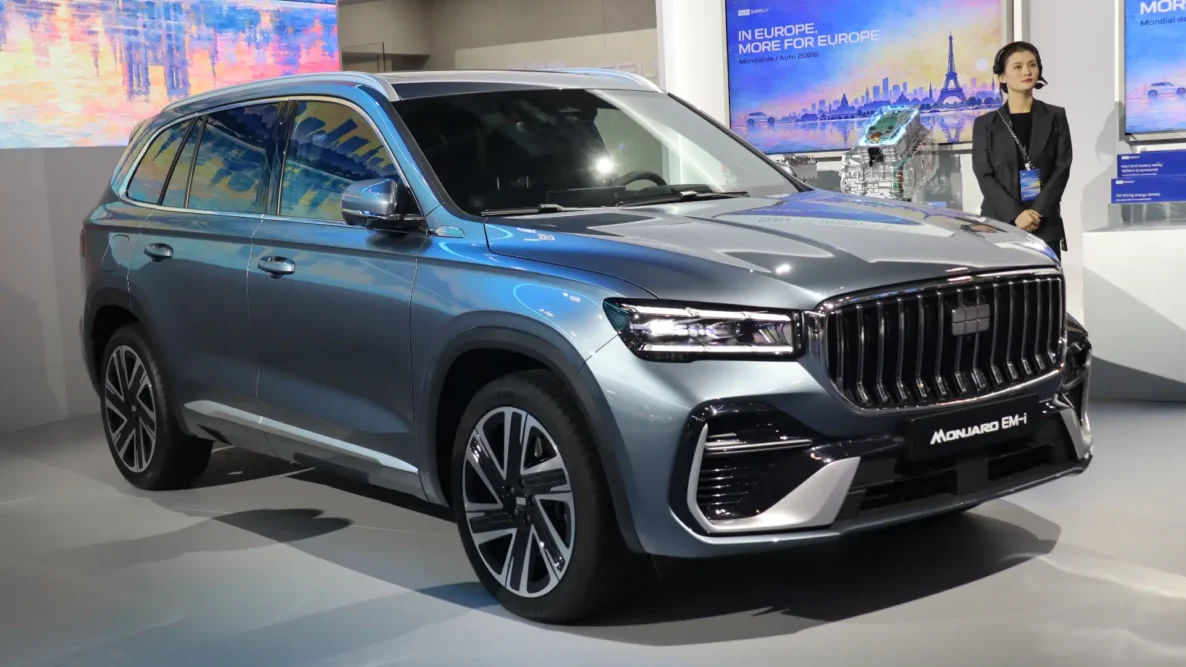
Around 4.8 metres long, it combines a 1.5-litre turbocharged petrol engine with plug-in hybrid technology, with front- and all-wheel-drive versions planned —the latter adding adaptive damping. A 633-litre boot, and the backing of an eight-year, 125,000-mile vehicle warranty, help establish its family-car credentials.
Monjaro buyers will be able to choose between an 18.4kWh battery for FWD versions and a 29.8kWh battery for e-AWD versions.
There are still important gaps in what we know, including prices and electric range. Those will matter rather more to prospective owners than the number of available massage settings.
Geely also revealed Project KO11, a much more upright, rugged-looking plug-in hybrid intended for demanding terrain that we previewed back in February. European availability is planned for the end of 2027, with the final name and fuller specifications still to come.
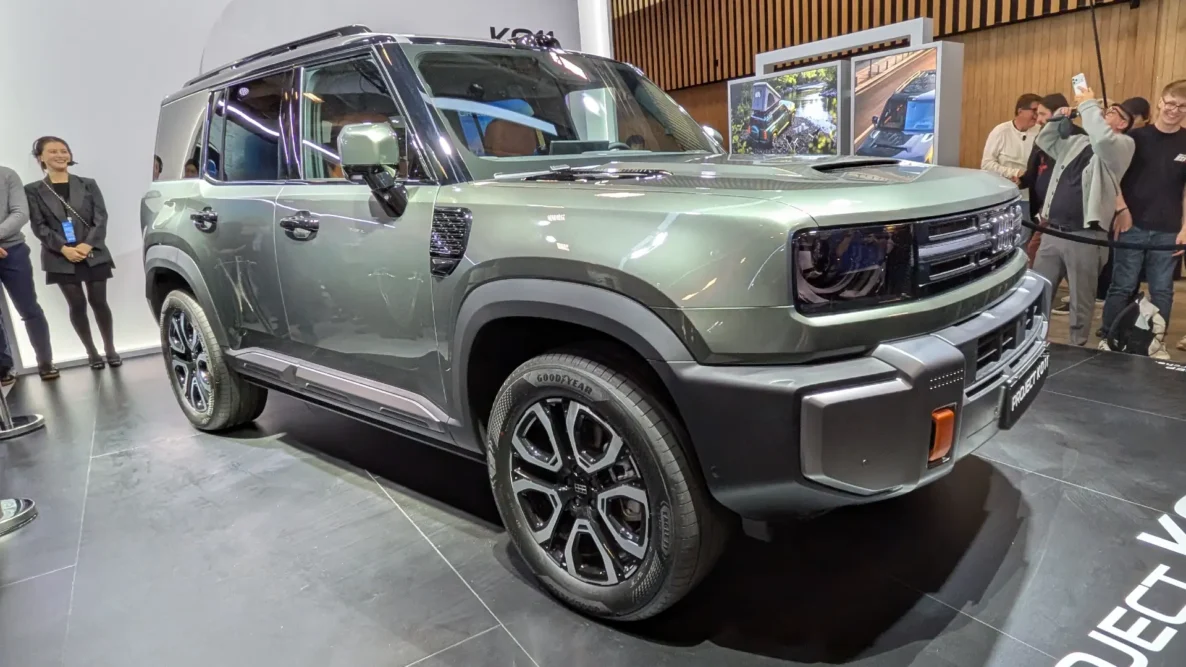
Together, they show Geely looking beyond a single interpretation of the family SUV. We also spoke to the people helping shape its European products; we’ll explore what that means for British drivers in a separate feature.
Li Auto is a name to learn
Li Auto will be unfamiliar to most British readers, but its European arrival is worth watching.
The company built its reputation in China on family vehicles and range-extender technology, but its first European model, the Li 6, is a fully electric five-seat SUV. That’s not much of a surprise, perhaps, but at least Li Auto says it has tuned the chassis and adapted the software for European customers.

Initial deliveries are scheduled for the Netherlands and Norway in the first quarter of 2027. A UK launch is likely to follow towards the end of 2027.
Encouragingly, Li Auto also discussed parts distribution, technical training, roadside assistance and aftersales support. Those are less glamorous than a rotating show stand, but rather more useful once someone has bought the car.
212 brings a different sort of presence
Another unfamiliar badge in Paris was 212, an off-road brand whose T01 takes the upright, square-edged approach to SUV design seriously.
Its presence adds something different to a show full of vehicles promising an adventurous lifestyle mainly through black wheel arch trim. The brand’s stated focus is proper off-road vehicles, with petrol and diesel T01 models and plug-in hybrids in development.
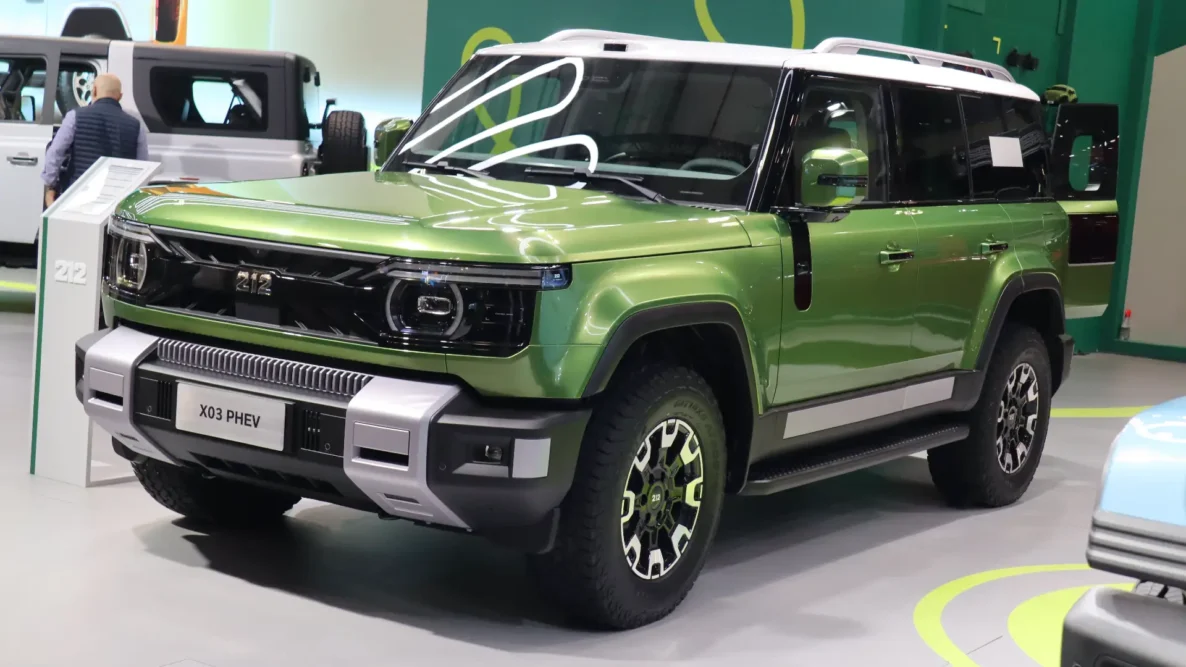
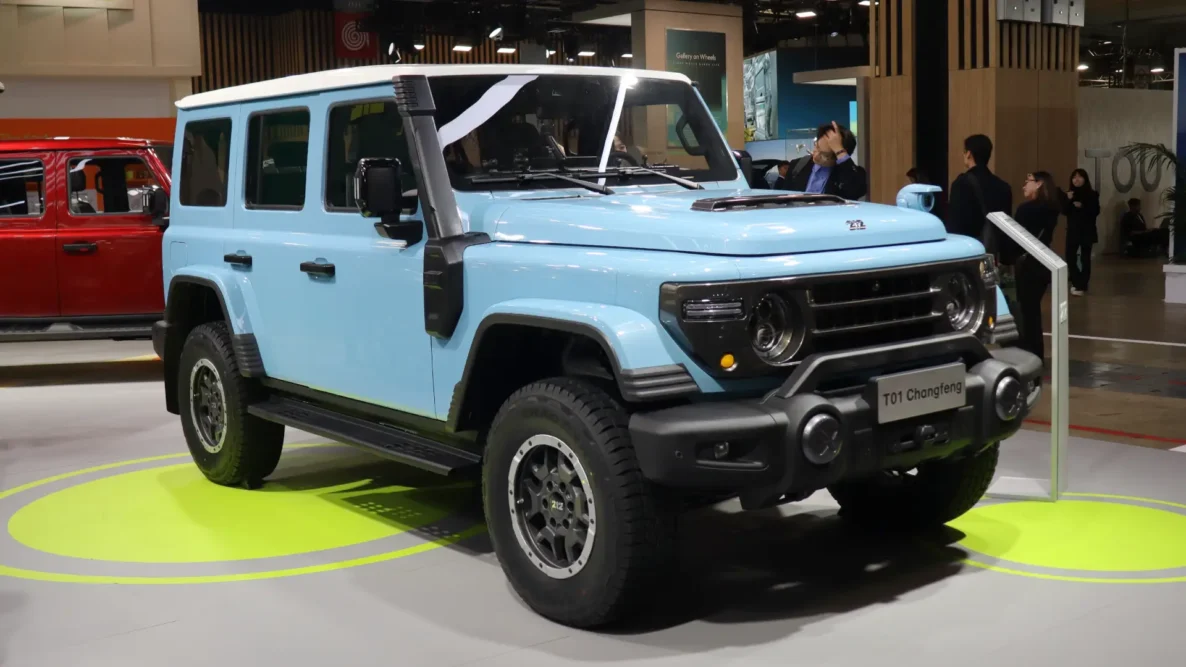
We haven’t established a confirmed UK launch plan from the show material, so there’s no British price or arrival date to attach to it yet. For now, 212 is one to watch if your interest in SUVs extends beyond an elevated driving position and somewhere to put a reusable coffee cup.
Linktour thinks smaller
Linktour’s Alumi takes us in almost the opposite direction: compact electric urban transport, with Paris offering a chance to explore how much personality can fit into a small footprint.
Its Creative Collection included a collaboration with Milan’s SpInzi studio, an Atlas Blue version planned for commercial release in 2027, and the Alumi Via, which adds an outdoors-inspired treatment.
Underneath the styling is an emphasis on lightweight aluminium construction and the use of recycled material. There’s no confirmed UK launch, but the broader idea deserves attention. Personal transport can be distinctive without becoming bigger, heavier and more imposing every time it’s replaced.
Not everyone needs an expedition vehicle. Some people just need to get across town.
Plenty more fighting for attention
There were other newcomers and updates competing for space. Aion unveiled the UT Cross and GS7 ahead of UK arrivals in 2027, the latter introducing hybrid power to its British offering. Omoda’s sharply styled 4 is also scheduled for a UK launch next year.
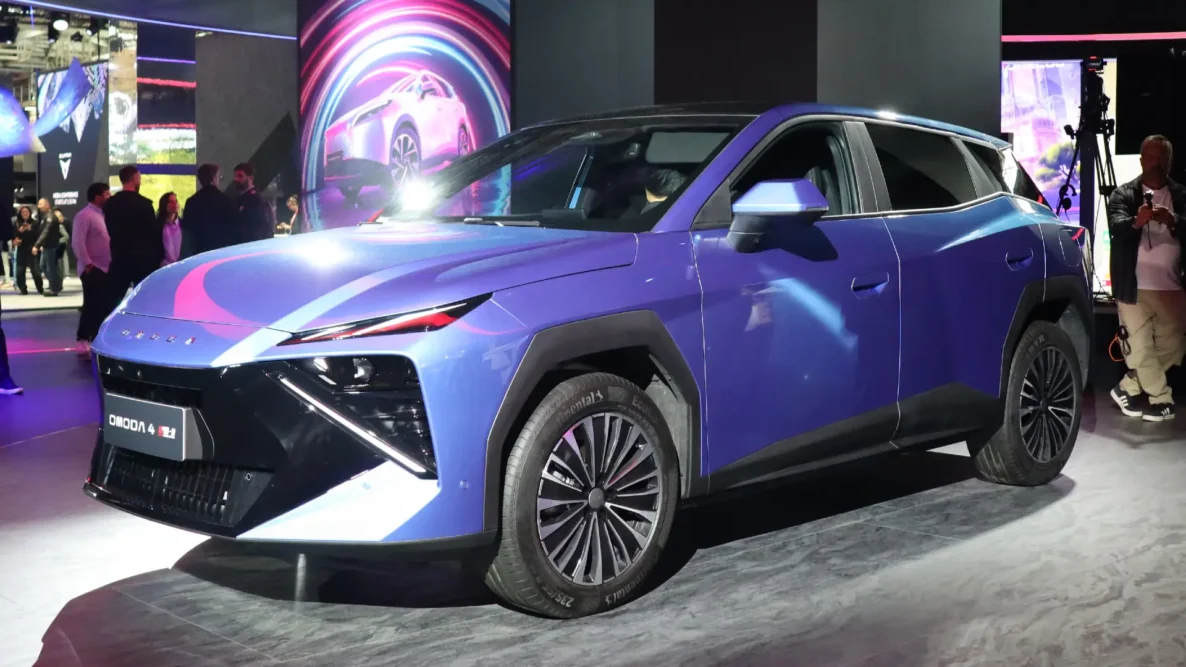
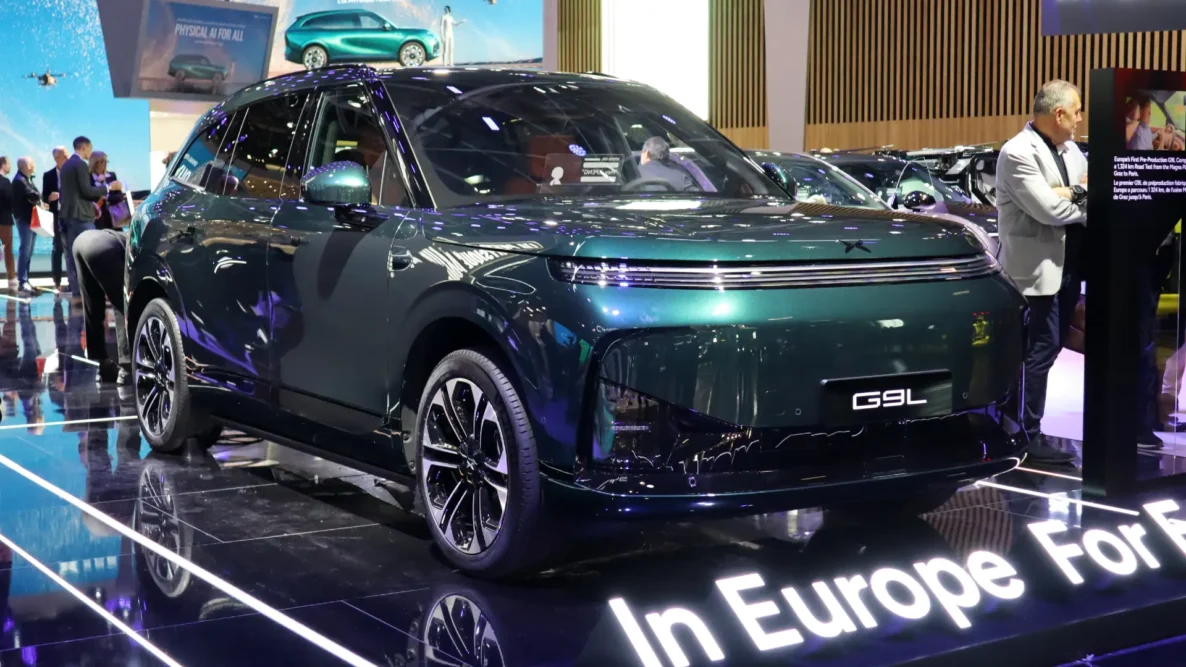
Changan introduced the Nevo Q05 to European audiences, while Zeekr showed its 9X luxury plug-in hybrid and an updated 7X. Hyundai brought the new Bayon and Tucson, and Kia’s expanding hybrid offering included the Seltos and K4. Xpeng also unveiled the G9L, a large six- or seven-seat SUV offering electric and range-extender power.
The difficult part for all of them will be turning a convincing show appearance into a convincing ownership proposition. Price, performance, and how the technology behaves on a wet Tuesday will settle more arguments than a flash stand in a crowded show hall ever could.
And yes, there were cars to dream about
Paris also delivered the sort of machinery that makes motor shows worth visiting even when you aren’t shopping.
Peugeot revisited both the RCZ and its rallying heritage, Alpine reinterpreted the A310, Citroen brought back the spirit of the 2CV, and Renault explored what a modern Espace could be if it embraced being an MPV again.
Not all of those ideas will reach a showroom, and certainly not in exactly the form displayed. They deserve a closer look of their own, though, because they made a persuasive case that the electric age can offer more than variations on a familiar SUV silhouette.
For the cars nearer production, the most encouraging development was choice, with smaller electric models, different approaches to family transport, and manufacturers trying to make charging less of an event. The important test comes when the show lights go off and the price lists arrive.

He is the founder of Huff Media, publisher of Professional Pickup, Professional Van, Average Janes, Average Joes, and CALIBRE. His work focuses primarily on light commercial vehicles, pickups, and real-world vehicle use, with much of his time spent on manufacturer launches, industry events, and long-term vehicle testing.
- There’s a new Tesla Roadster with rockets. We’re struggling to care. - 16 October 2026
- Paris Motor Show 2026: Small cars, big ideas and names you’ll be hearing more of - 16 October 2026
- DeLorean joins flying car racing because roads are apparently optional - 14 October 2026