

Toyota has given the Yaris Cross a new face and a bit more kit, but don’t expect a different car underneath. That’s largely fine, as its compact dimensions, easy-going hybrid drive and remarkable reluctance to visit a petrol station were already compelling reasons to buy one.
But at £33,695 for the Excel trim tested here, it’s a fair chunk of money for a small SUV. Do its generous equipment and all-wheel-drive availability make it a more rounded proposition than the sportier-looking GR Sport or cheaper Icon or Design versions?
Pros
+ Excellent real-world economy
+ Easy to drive
+ Lots of useful equipment
Cons
– Expensive at higher trim levels
– Modest changes for existing owners
– No great leap in driving enjoyment
What’s changed on the new Toyota Yaris Cross?
You’ll spot most of the changes at the front. There’s a body-coloured honeycomb grille and redesigned LED headlights, while the Excel gets a fresh set of 18-inch alloy wheels. It looks a touch sharper, although you’ll still recognise it instantly as a Yaris Cross. If you want to push the styling a little further, a contrasting black roof is now an option.


Inside, the Excel has a 12.3-inch digital driver’s display and a 10.5-inch infotainment screen, along with a heated steering wheel and powered tailgate. Its safety kit includes a Blind Spot Monitor, rear cross-traffic alerts, a panoramic view camera and parking assistance.
The seats get a new mix of leather sections and SakuraTouch, a material made partly from plant-derived and recycled sources. You don’t need to remember the name to appreciate that it gives the cabin a lift.
The main mechanical change applies to the range rather than the Excel specifically, although even then it’s the removal of something old and not the introduction of something new. Toyota has dropped the old 116hp hybrid, making the 130hp version of its 1.5-litre petrol-electric system standard across the board. Excel buyers could already have the more powerful setup before the facelift, which helps explain why this one feels so familiar.
Front-wheel drive is standard, although the Excel is also offered with optional all-wheel drive.

What’s the Yaris Cross Excel like to drive?
If you drove the previous Yaris Cross, there are few surprises here, but Toyota was never trying to fix a bad car. The Excel still feels straightforward to drive, and its compact size takes much of the bother out of town streets and car parks.
Its 130hp is entirely adequate, even if nobody is going to mistake this for a sporty SUV, while the hybrid system gets on with the job without a plug or any special planning on your part, almost refusing to use fuel.
Ah yes, the fuel economy. The trip computer showed 74.6mpg after our time behind the wheel, and we weren’t creeping about in a determined attempt to set a record. Granted, an afternoon in and around Crawley isn’t going to stretch the car, but the result still beats Toyota’s published WLTP figure of 55.3–64.1mpg for the wider line-up.
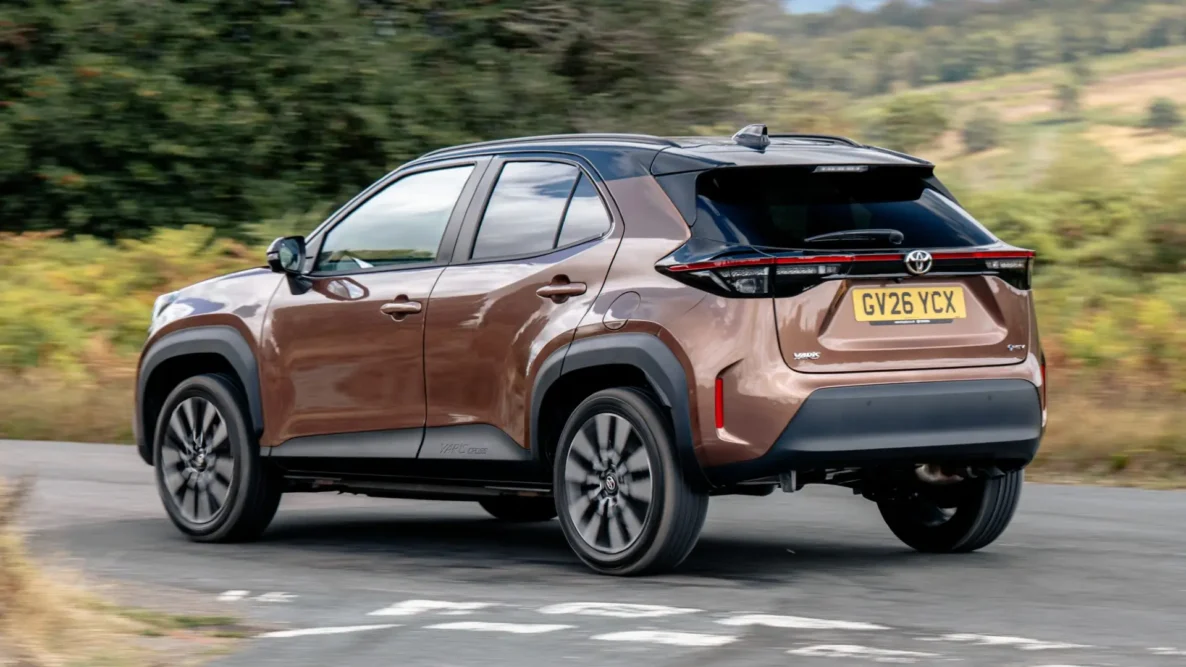
As ever, one drive isn’t a guarantee of what every owner will see, and your own result will depend on where and how you drive, but it’s a striking reminder of why the Yaris Cross is so easy to like. Its appeal is how easily it fits into an ordinary day.
Is it practical enough?
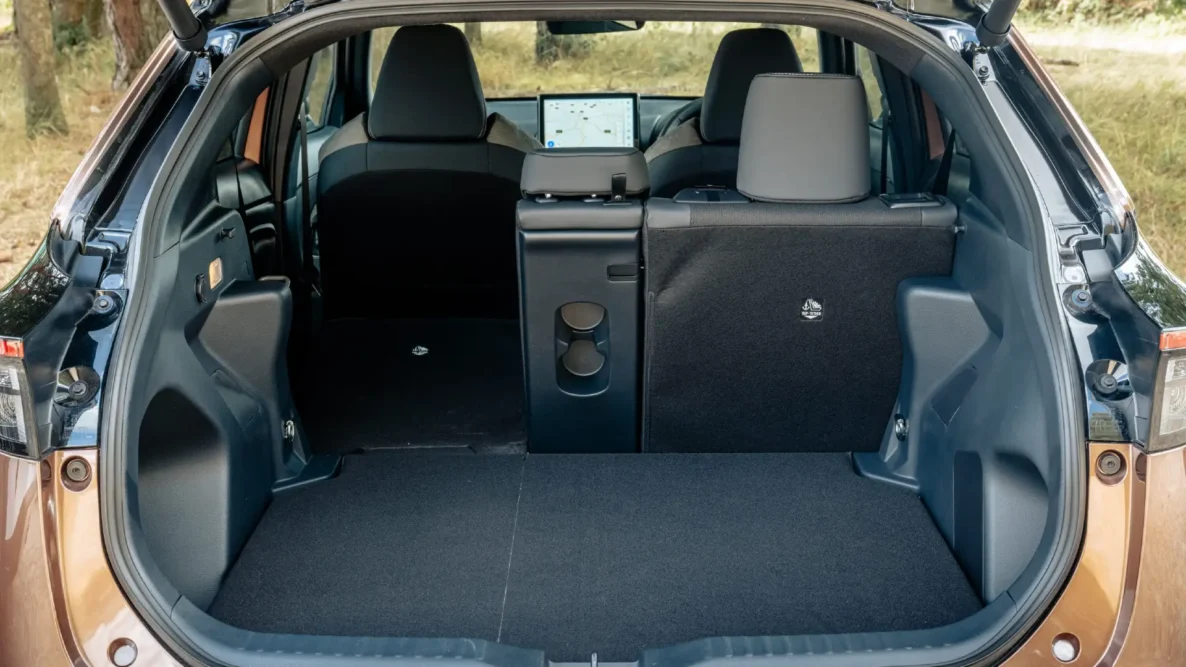
The Yaris Cross makes more sense as a small SUV rather than a family-sized one. The raised driving position and manageable dimensions are part of its appeal, and there’s enough room for the usual shopping, bags, day-to-day clutter, and even a couple of young children. The 40:20:40 split rear seatbacks are handy when something long needs to come along for the ride.
The Excel’s new upholstery makes the cabin feel a little smarter, while the powered tailgate helps when your hands are full. Beyond those touches, existing Yaris Cross owners will find themselves on familiar ground.
Should you buy one?
The refreshed Yaris Cross is a very good small hybrid SUV because the fundamentals still work. It is easy to use, sensibly packaged and, on the evidence of our drive, capable of exceptional economy. The new front end and added equipment make it a little more appealing without changing the recipe.
Whether you need the Excel is a tougher call. It costs £6,250 more than the entry-level Icon, so make sure you’ll use its extra kit, screens and safety features. Spending an extra £1,400 on the GR Sport is probably worth avoiding, though, as its sportier looks don’t bring a markedly different drive — it might wear the GR badge, but it’s far removed from the red-hot GR Yaris .
.
The closely related Lexus LBX is £2,750 more, but brings a much more luxurious feel to proceedings. Stretching to that might seem tough, but monthly costs could well end up being lower.
But if you want a Yaris Cross with plenty of kit, the Excel is a sensible pick. If you already own one, the facelift probably isn’t reason enough to trade it in.

He is the founder of Huff Media, publisher of Professional Pickup, Professional Van, Average Janes, Average Joes, and CALIBRE. His work focuses primarily on light commercial vehicles, pickups, and real-world vehicle use, with much of his time spent on manufacturer launches, industry events, and long-term vehicle testing.
- There’s a new Tesla Roadster with rockets. We’re struggling to care. - 16 October 2026
- Paris Motor Show 2026: Small cars, big ideas and names you’ll be hearing more of - 16 October 2026
- DeLorean joins flying car racing because roads are apparently optional - 14 October 2026