
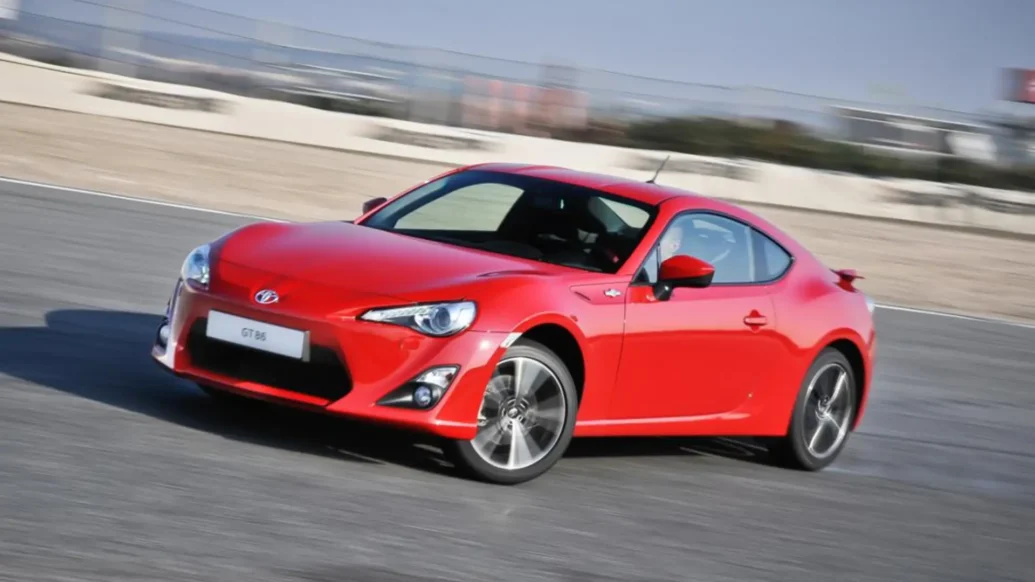
The Toyota GT86 is an important car for the Japanese manufacturer. Since the demise of the Supra, Celica and MR2, there’s been no real ‘halo’ car in a range of worthy but functional family vehicles and, despite increasing sales, Toyota needs a car that will get people talking about the brand.
Since revealing the GT86 concept in October 2009 at the Tokyo Motor Show, that’s exactly what’s happened. There hasn’t been a new car launched in recent times that has been quite so hotly anticipated; the promised formula of light weight, reasonable power and rear-wheel-drive characteristics, all developed in partnership with Subaru, has proved an irresistible combination.
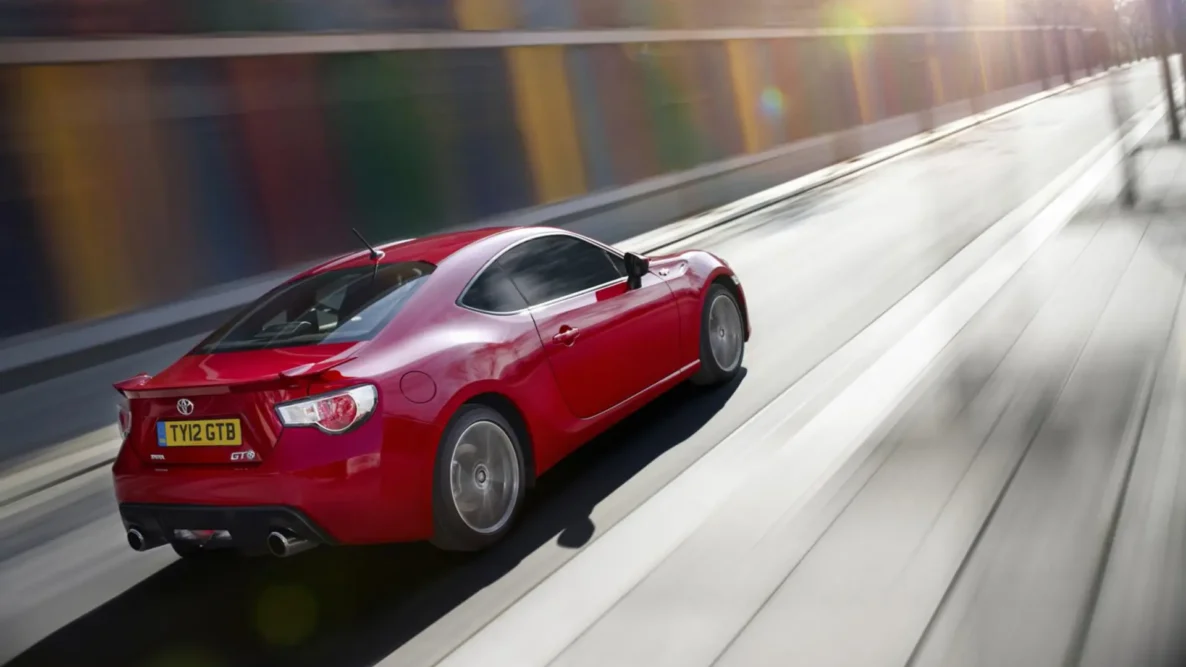
Commentators in internet forums, offices and bars have all declared that the GT86 will simply be awesome.
The four-seat coupé is focused almost entirely on driving pleasure. Power is provided by a 2.0-litre engine up front and sent to the rear wheels via a limited-slip differential, while Toyota has worked hard to keep both weight and the centre of gravity down.
For that reason, it’s very compact, being around the same size as its most obvious rival, the Audi TT, while sitting quite a bit lower and weighing an awful lot less.
Add to that the fact there’s 200hp on tap, with no turbocharger to hold up the power delivery, and the GT86 should be a hoot.
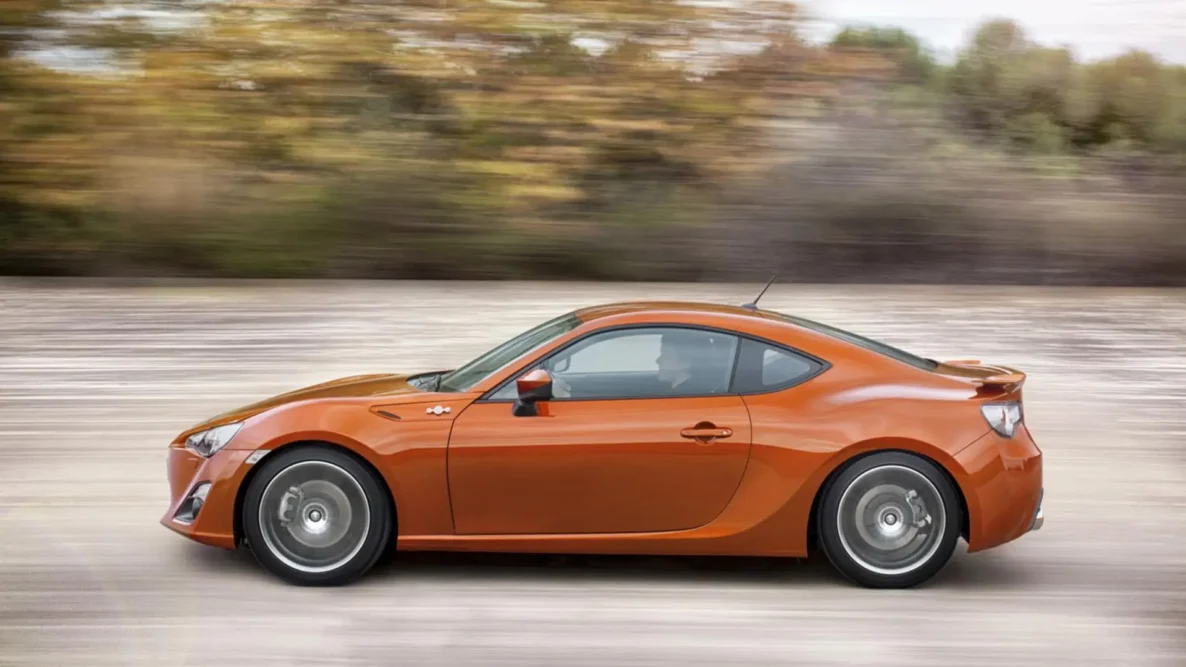
Under normal driving, though, it’s oddly not that exciting. Not that dramatic.
The ride is firm but compliant, soaking up imperfections on the smooth Spanish test roads with ease, although speed bumps thump through the cabin. It’s reasonably quiet too, with the relatively skinny tyres producing little road noise alongside a slightly muted exhaust note.
Push a bit too hard and the car understeers gently before the electronic wizardry brings everything neatly back into line.
There’s plenty of time to look around the cabin at this point.
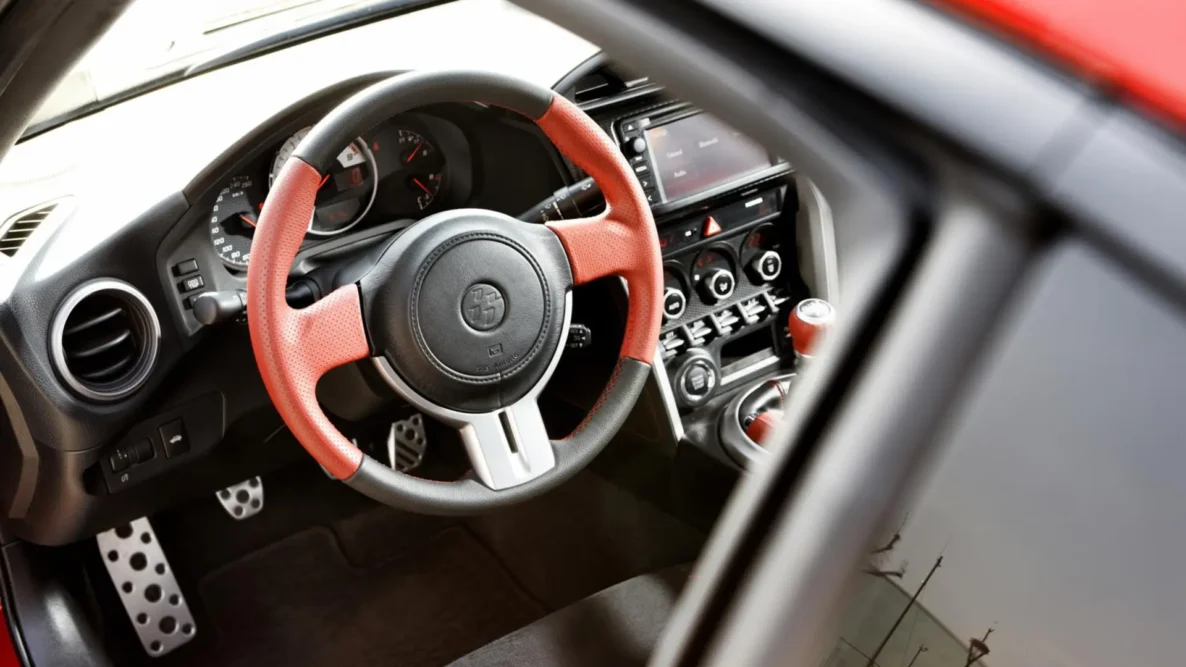
You sit low in the car, with your hip just 40cm from the ground, while some very supportive seats hold you firmly in position. The short-throw gear lever is positioned perfectly and offers a smooth, quick change through the six ratios on offer.
Elsewhere, it all feels very 1980s, but in a good way.
The switchgear has a fighter-jet feel to it, while there’s a large digital speed readout nestled inside the central rev counter. That digital theme continues across the climate controls and central clock.
It’s definitely old school, but not old-fashioned.
In the rear, the seats are little more than a token gesture. They fold down to make the sensibly sized boot even more usable, while a pair of cupholders sit far enough back to be used by either front- or rear-seat passengers.
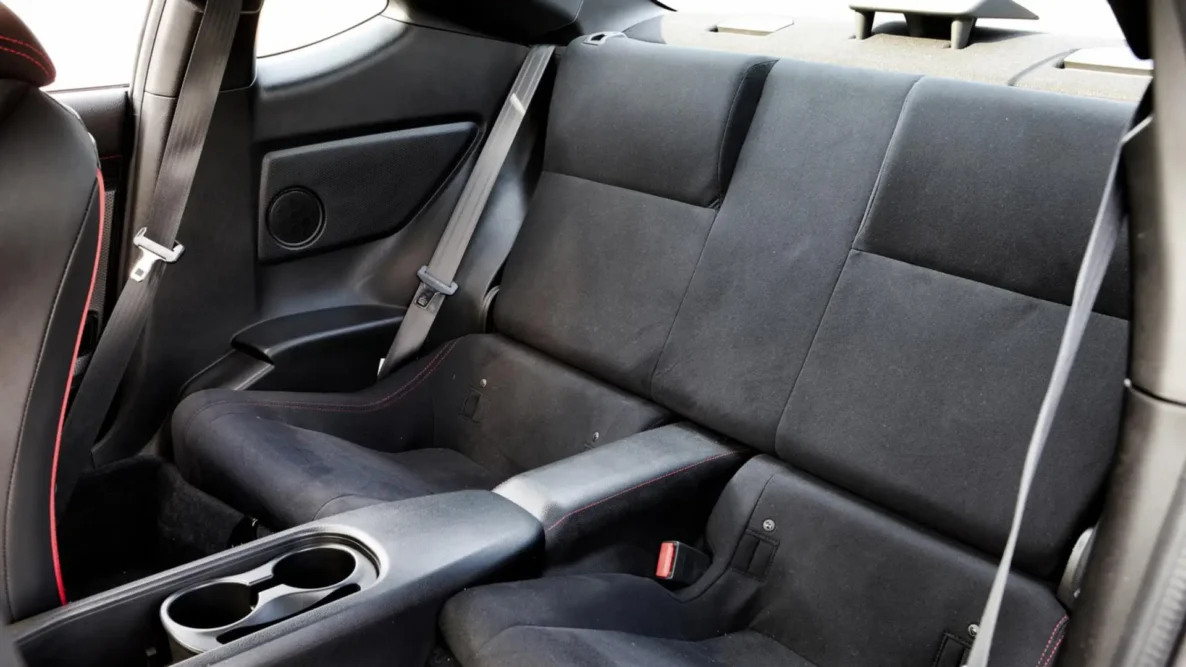
Just ahead of those are buttons for switching the stability control into Sport mode, or turning it off entirely.
If you ever drive or buy one of these cars, press that button.
Every time.
Switching the car into Sport mode transforms it from something sensible and grown-up into a car that will make you smile on every journey.
The GT86 no longer just follows a line prescribed by a computer. It moves around. It feels alive.
Now I understand what the GT86 is all about.
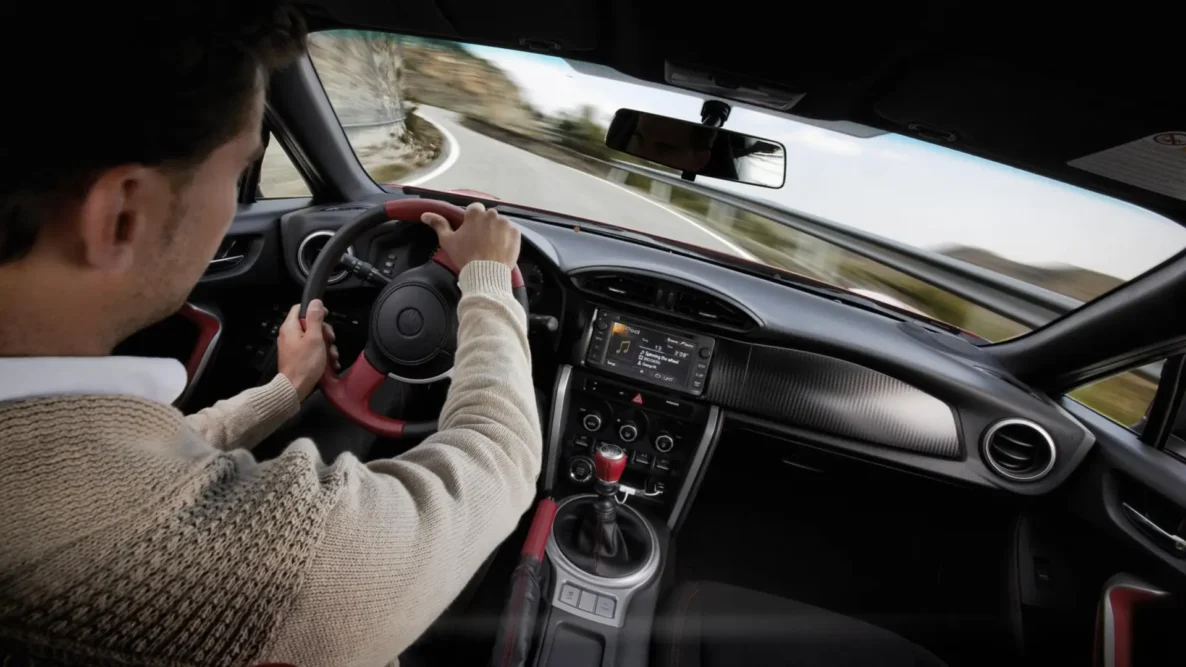
Fun has been mentioned throughout the presentation, but only now is it clear just how much fun the car really is.
The trend in recent years has been to chase ever-increasing power outputs, higher top speeds and faster times around the Nürburgring.
Toyota has looked at all that and largely ignored it.
The skinny tyres — shared with a Prius — suddenly make sense when you’ve only got 200hp to play with. There’s just enough grip, with the rear end able to step out slightly before the electronics prevent things going too far.
They don’t stop play entirely. They just keep the game moving.
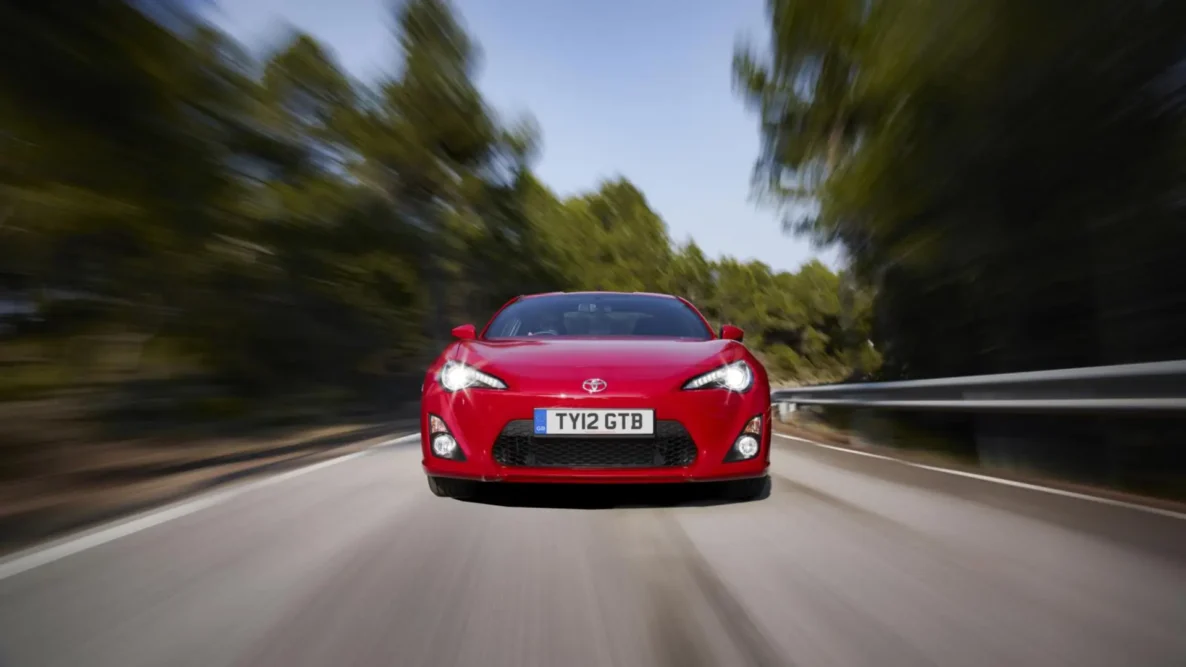
The car’s weight distribution is close to ideal, with a 53/47 balance at rest that shifts rearwards under power. That transfer helps keep the tyres planted, while the Torsen limited-slip differential prevents too much power being wasted through wheelspin.
Never does it feel unsafe. Just engaging.
Even the exterior design helps. The sharp edges of the front wings are visible from the driver’s seat, allowing you to place the car more accurately.
For those with more skill, bravery and a larger tyre budget, switching the systems off completely allows plenty of sideways fun.
Eventually, buyers will be able to tailor the car more closely to their tastes, with an uprated braking system among the first options. TRD parts will also be officially available in the UK for the first time, while Toyota plans regular updates to keep the car fresh.
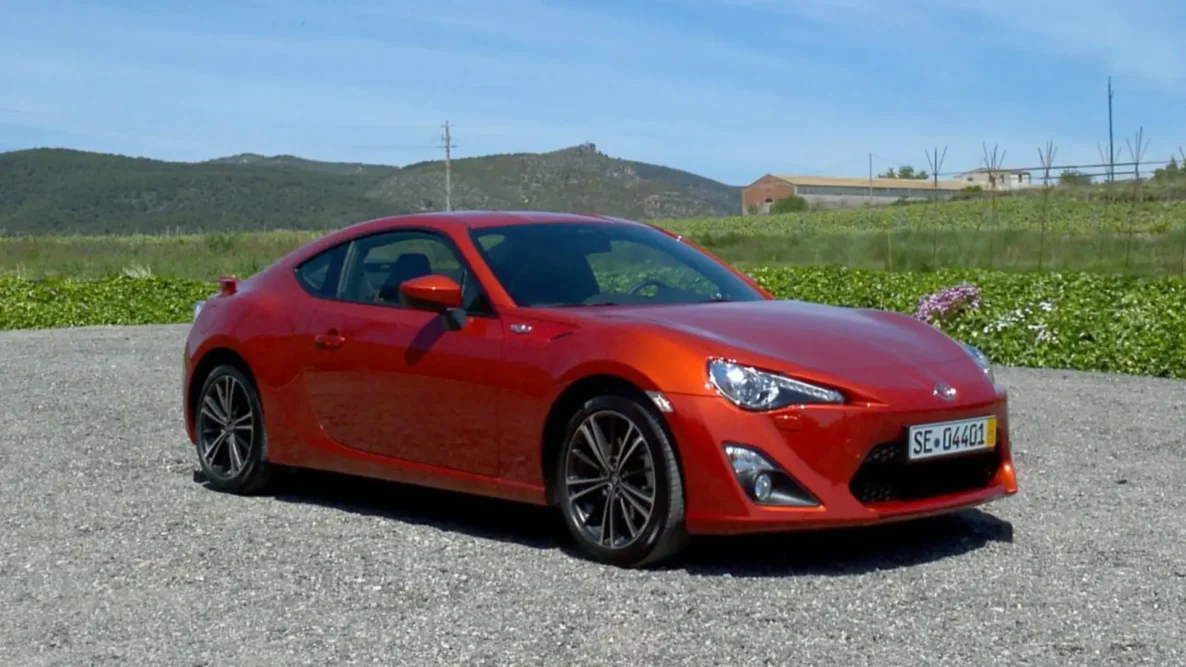
I really wanted to like the GT86 and, initially, I was disappointed that it all felt so normal.
Then I found that Sport button.
From that point onwards, I didn’t stop smiling.
And that hasn’t happened in a £25,000 car for quite some time.
For around the same money, you could order a Peugeot RCZ or an Audi TT.
Don’t.

He is the founder of Huff Media, publisher of Professional Pickup, Professional Van, Average Janes, Average Joes, and CALIBRE. His work focuses primarily on light commercial vehicles, pickups, and real-world vehicle use, with much of his time spent on manufacturer launches, industry events, and long-term vehicle testing.
- First drive: Toyota Yaris Cross review – new face, familiar strengths - 25 September 2026
- GKU E200 review: A brilliant £100 dashcam with one rather awkward problem - 28 August 2026
- Check under your bonnet with a free prostate test from Subaru - 27 August 2026