

The entry-level Polestar 5 has 748hp. Entry-level. The one you buy if you decide you don’t need the really fast version.
For perspective, that’s enough power to press you firmly into your seat and make you briefly reconsider some fairly fundamental ideas about physics. If your passenger was about to say something, they might need a moment to gather their thoughts again.
There is a faster version, naturally. But after spending most of a day driving the Dual Motor around Northumberland, with a shorter spell in the Performance, we’re struggling to imagine many situations where you’d need it.
More interestingly, we’d be very happy to spend considerably longer in either.
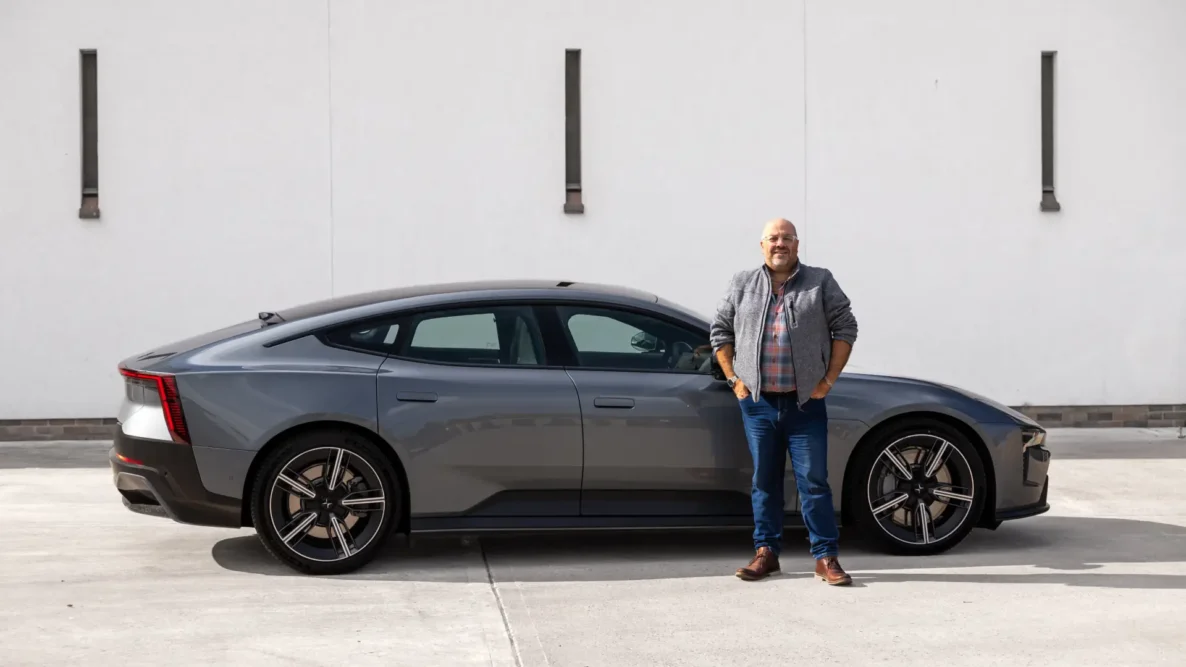
A concept car you can actually buy
The Polestar 5 is the brand’s new flagship, a four-door electric grand tourer taking on the Porsche Taycan, Audi e-tron GT and Lotus Emeya — although Polestar don’t seem too bothered about how many they it sells. This is the definition of a halo car, a model to get people to notice Polestar and add it to their consideration list for a more sensible family SUV.
With prices starting from £89,500, this is firmly in the realm of cars we can admire while checking whether our lottery numbers have come up.
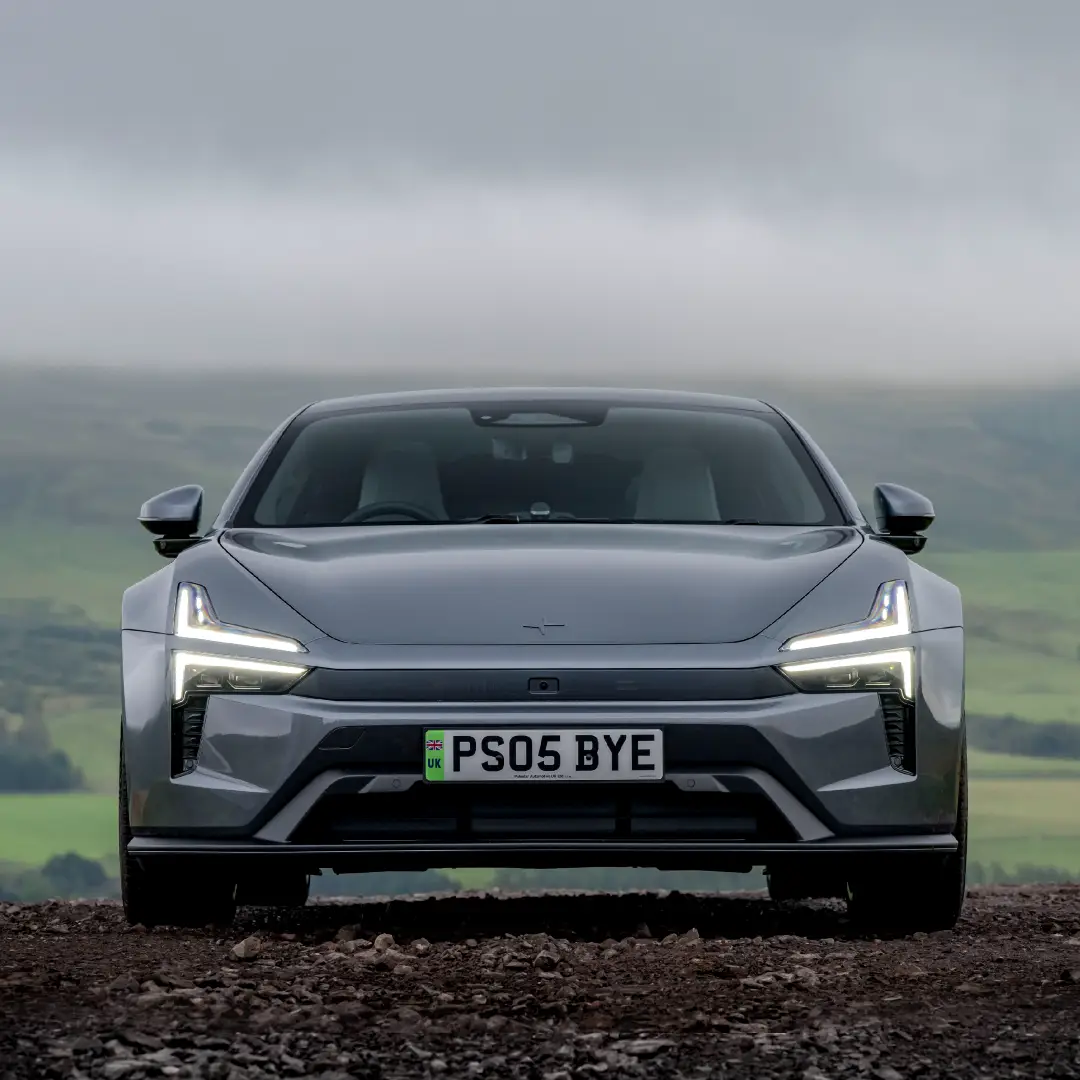

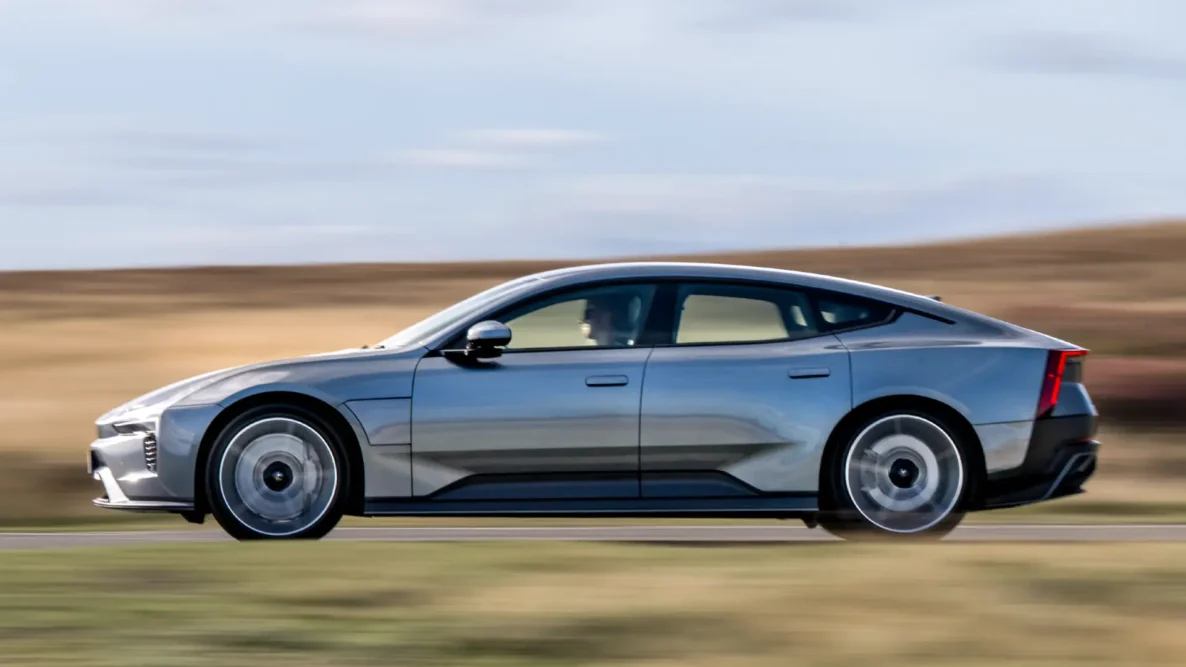
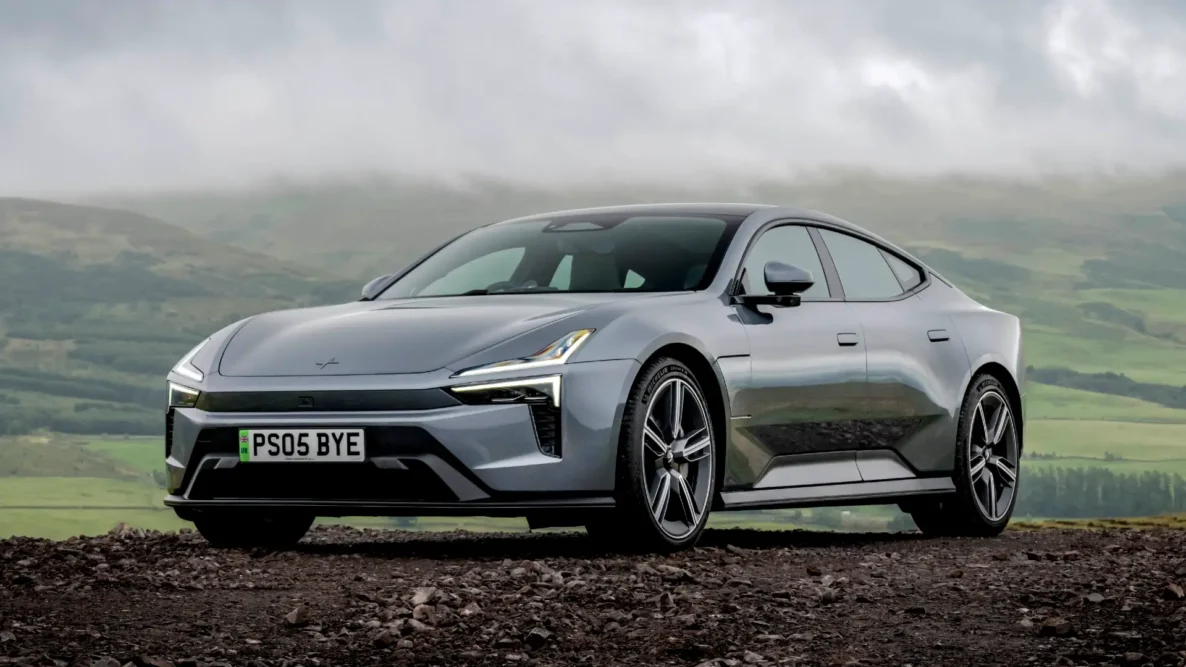
It began life as the Precept concept in 2020, and the production version has kept a remarkable amount of that car’s appearance. Usually, a concept car passes through several departments before emerging with smaller wheels, a taller roof and most of its interesting bits missing. This one seems to have escaped relatively unscathed.
The low nose, sharp shoulders and low roofline give it a sleek shape, while our car’s optional 21-inch wheels complete the impression of something firmly attached to the road. It looks like a limpet clinging to the tarmac. Even stationary, it looks like it’s clinging to the tarmac for dear life.
There’s substantial engineering underneath the styling, too. The 5 uses its own bonded aluminium platform, developed by Polestar with input from its teams in Sweden and the UK. It’s a sizeable thing, stretching beyond five metres and weighing around two and a half tonnes, but considerable effort has gone into making it behave.

How fast do you really need to go?
The Dual Motor has two electric motors, all-wheel drive, 748hp and 812Nm of torque. It reaches 62mph in 3.9 seconds.
Spend £104,950 on the Performance and you get 884hp, 1,015Nm and a 0–62mph time of 3.2 seconds. It’s quicker, certainly, but the difference feels marginal when you’re actually driving. Both are already well beyond the point where more acceleration makes much useful difference on a public road.
What makes the Dual Motor so impressive is how well it manages everything that accompanies the speed. The bespoke Michelin tyres seem to have unending grip, at least as far as you can reasonably explore on public roads. The car’s responses are spot on, letting you place it exactly where you want it.
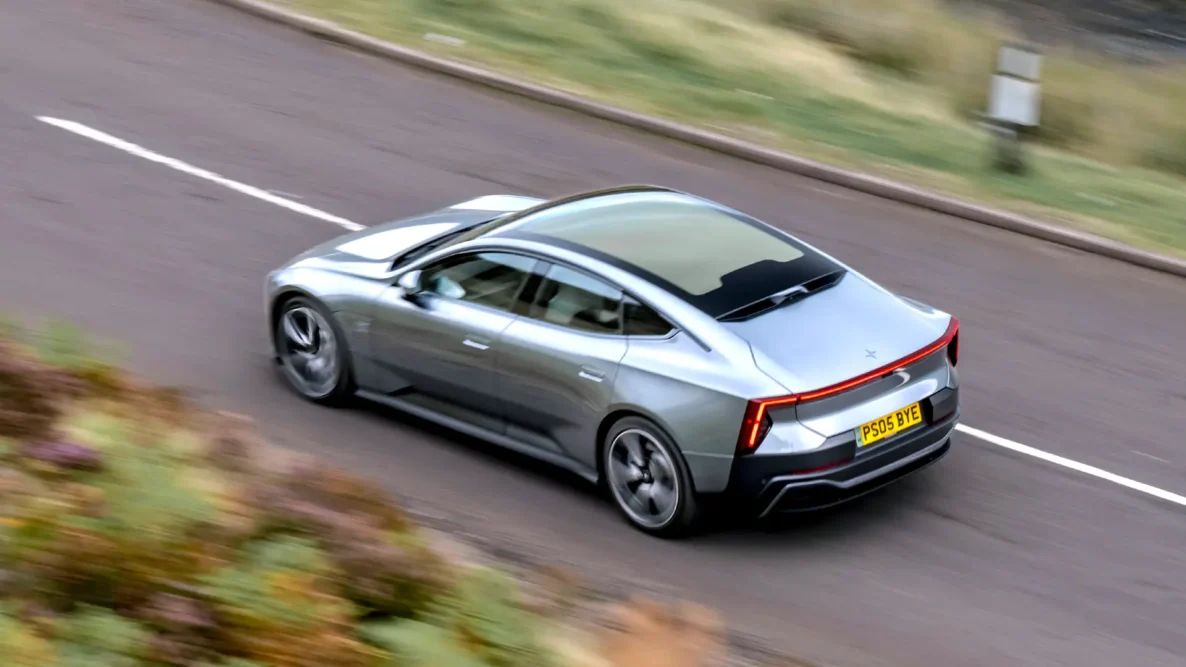
There’s a precision to it that makes the whole thing feel carefully considered. You’re driving a very large, very powerful car, but you can trust it to do what you ask.
Joakim Rydholm, Polestar’s head of driving dynamics, told us that, during the final tuning, a 1.5% adjustment to the front dampers gave him goosebumps when he drove the result. Most of us would struggle to get that excited about a spreadsheet full of suspension settings, but having driven the car, we can see why he did.
Do you need the Polestar 5 Performance?
The strongest argument for spending more is the suspension. The Dual Motor uses passive dampers, while the Performance gets adjustable MagneRide dampers.
The Performance setup is better, without doubt. It adds a little more composure and gives you scope to adjust the suspension to suit the road and your mood. But the standard Dual Motor is already fine. Firm, yes, yet supple enough that a long drive holds plenty of appeal.

We wouldn’t feel obliged to spend the extra money. If you want the best version and have the budget, the Performance provides it. If you’re wondering whether the cheaper car will leave you wishing you’d bought something else, our day in it suggests you can relax.
You should also keep your expectations in perspective. This isn’t an outright sports car. It’s too long, wide and heavy for that, however effectively the chassis manages its bulk.
As a grand tourer, though, it makes an awful lot of sense. Point it towards somewhere a substantial distance away, settle in, and enjoy the interesting roads along the way. We’d happily cross continents in it.
Comfortable cabin, complicated controls
Despite that low roofline, getting in and out is easy thanks to the frameless doors. Once ensconced, it’s comfortable, and our car’s optional Bridge of Weir leather added a suitably expensive feel.

That upgrade costs £5,300, although it also brings ventilation and massage for the front and rear seats. Our car had the £4,000 Bowers & Wilkins audio system, too, and was listed at £103,000 as tested. The options require almost as much restraint as the accelerator.
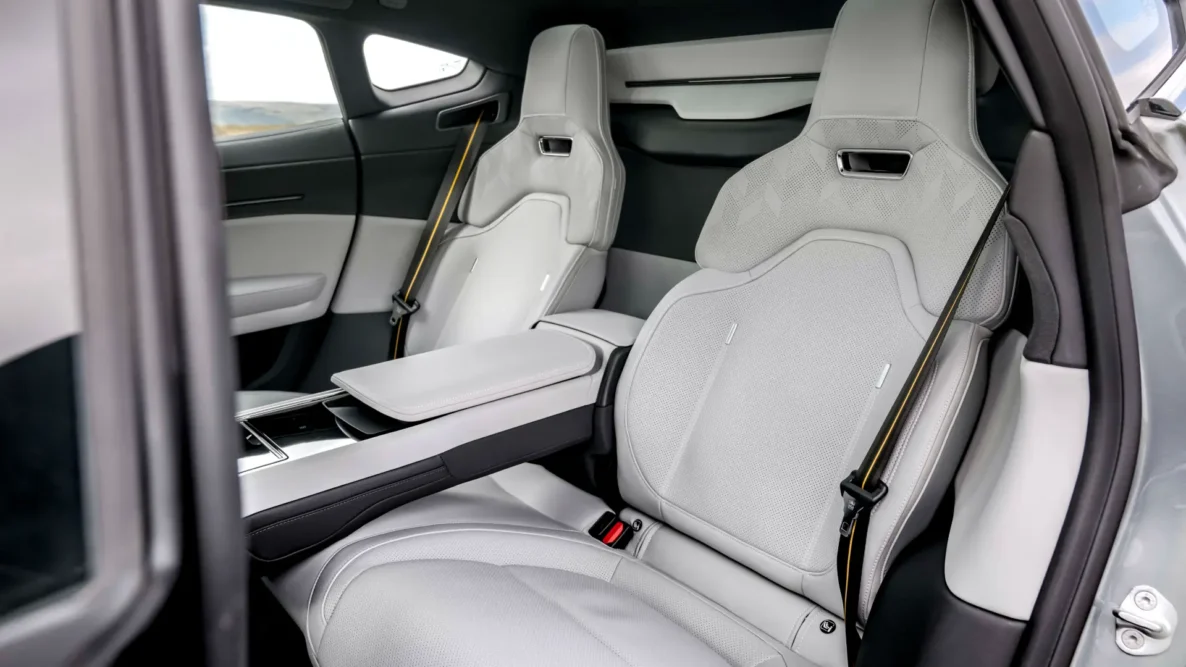
Polestar calls it a 4+1 seater: there are four main seats, the rear seat split by a substantial armrest. Fold it up and a fifth, lumpy and uncomfortable seat is available, but nobody will want it. The panoramic glass roof — complete with a Polestar logo subtly embossed on it — helps keep the cabin light, while luggage space is a fairly modest 365 litres, supplemented by a 62-litre compartment under the bonnet. The rear seats fold if you need more room.
There’s no rear window, with a camera supplying the view in the digital mirror instead. This sounds like the sort of thing that should demand a lengthy explanation, but in practice it simply doesn’t matter. Would I have preferred a rear window? Like the Polestar 4, probably, yes, but the 5’s performance means you’re rarely looking behind you.
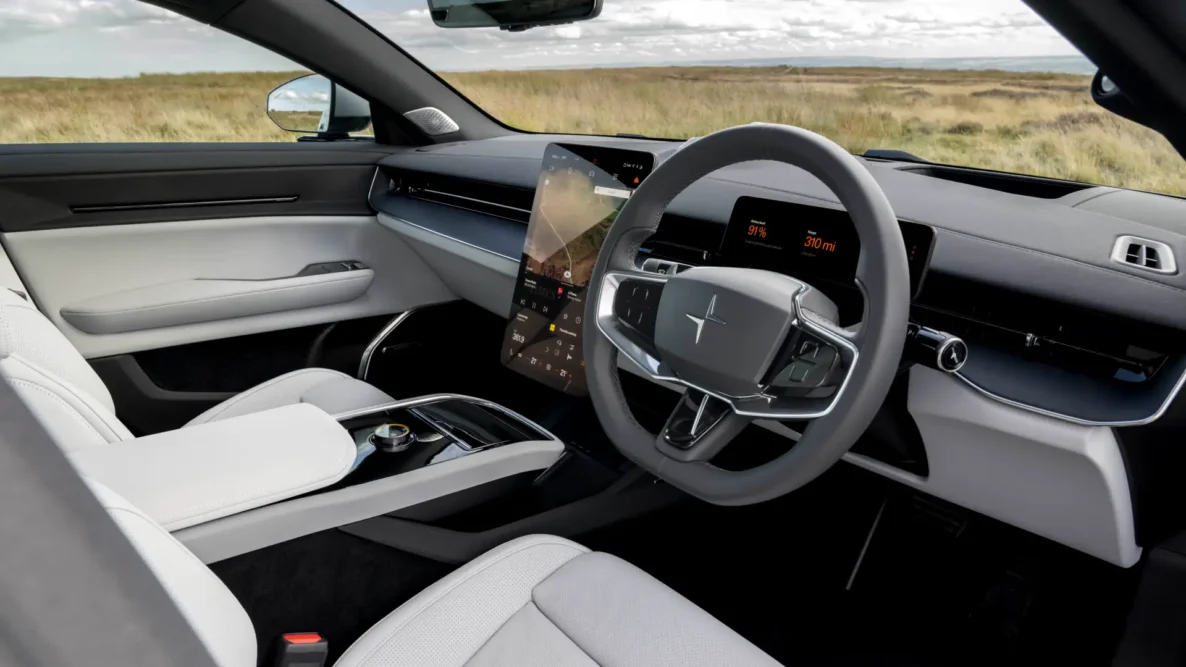
The infotainment screen demands rather more attention. As usual with Polestar, there’s too much going on in the display and too much effort involved in operating things that should be straightforward. It’s especially awkward when you’re pressing on and want to make a quick adjustment. Likewise, the touch-sensative steering wheel controls probabyl seemed like a good idea in design office, but they’re awkward to use and register plenty of accidental touches. It could be worse, but that’s a fairly modest ambition for a car costing this much.
The driver’s instrument panel is more successful. Its different display modes let you choose useful information, and the head-up display fitted to our car gives you another way to keep that information in view. We’d much rather have that than the usual animated cars showing what the driver assistance systems think is happening around us.
Polestar 5 range and charging
Both versions have a 112kWh battery, of which 106kWh is usable. Polestar quotes a maximum WLTP range of 421 miles for the Dual Motor, although our test car’s sheet gives 406 miles thanks to its larger wheels. The Performance claims up to 346 miles.
Those are official figures, and figures we fell well short of. There’s an obvious temptation to deploy more of that power than an efficiency test would recommend, and we did. Frequently. The result was us burning through electrons at 2.11 miles per kWh, which means we’d have got through a full charge in 224 miles.
Fortunately, the 800-volt electrical system allows charging at up to 350kW, with Polestar claiming a 10–80% charge in 22 minutes under suitable conditions. Find a sufficiently powerful charger and a stop should be short enough to fit around a coffee and a leg stretch.
Polestar 5: The Average Joes first drive verdict
The Polestar 5 is quite the car. It looks spectacular, has more performance than anyone reasonably needs, and backs up those headline figures with precise responses and a chassis you can trust.
The Performance model is better, particularly in its suspension, but we came away impressed with how complete the Dual Motor already feels. It’s comfortable enough for a long journey and capable enough to make the roads along the way worth seeking out.
The touchscreen remains a frustration, and £89,500 is a substantial starting point before you get anywhere near the options list. Those are real considerations, even with this much talent on offer.
Still, if you want a fast, distinctive electric GT, the 5 deserves your attention. We’d happily take the Dual Motor’s keys and head off on a very long drive.
With 748hp available, we might give our passenger a little warning first.

He is the founder of Huff Media, publisher of Professional Pickup, Professional Van, Average Janes, Average Joes, and CALIBRE. His work focuses primarily on light commercial vehicles, pickups, and real-world vehicle use, with much of his time spent on manufacturer launches, industry events, and long-term vehicle testing.
- JOE LOVES Polestar 5 first drive review: More power than sense, more polish than expected - 7 October 2026
- We went camping in a Geely EX5 and discovered why people buy tents - 4 October 2026
- The Midnight made a Bluetooth cassette player, and I need it - 30 September 2026