
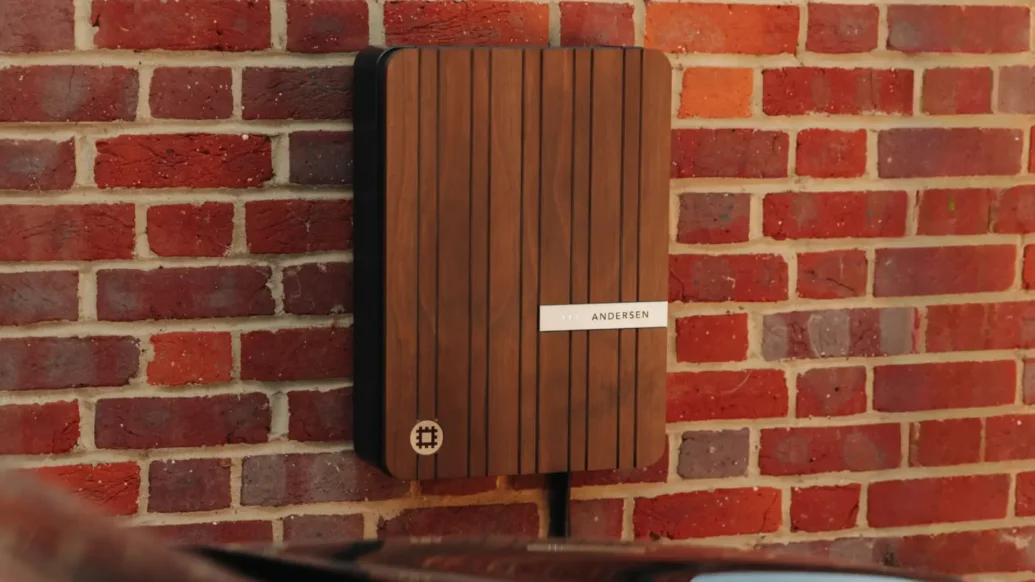
Your electric car charger can now be inspired by an Art Deco palace or a very large tree. Welcome to the future.
There was a time when choosing a home car charger was largely a matter of finding out which slightly ugly plastic box your energy company would install for the least offensive monthly payment.
It would go on the side of the house, charge the car overnight and remain completely unnoticed until it stopped working.
Andersen would prefer you to take the whole thing a little more seriously.
The British home charging company has partnered with English Heritage to create two limited-edition wooden fascias inspired by Wrest Park in Bedfordshire and Eltham Palace in London.
That means your electric car charger can now coordinate with a stately home, which is either proof that EV ownership has finally matured or evidence that we’ve all become far too interested in exterior finishes.
To be fair, the results are rather smart.
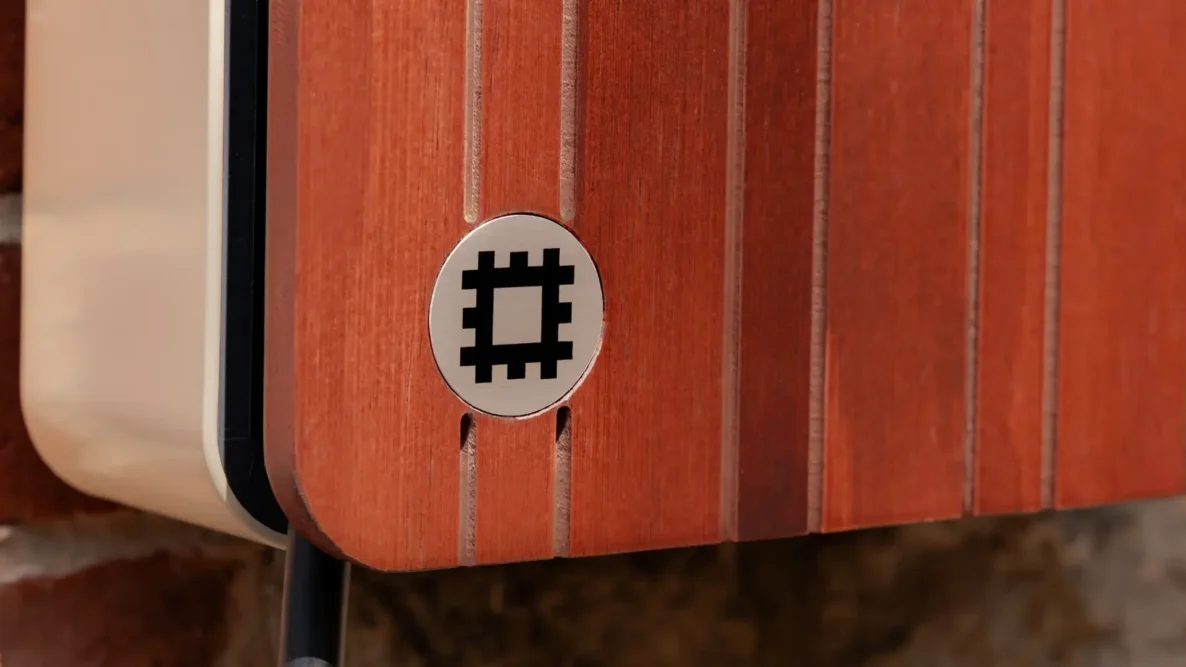
The first design is inspired by the Giant Redwood growing in the grounds of Wrest Park. It uses a rich redwood stain that gives the charger a warmer and more traditional appearance, while also providing a suitably local connection to Andersen’s Bedfordshire manufacturing operation.
The second takes its cues from the Blackbean veneer in the entrance hall at Eltham Palace.
The hall formed part of Stephen and Virginia Courtauld’s wonderfully extravagant 1930s transformation of the palace and was designed by Swedish architect Rolf Engströmer. Its sweeping timber-lined interior is one of the finest examples of Art Deco design in the country.
And now, naturally, it has inspired a car charger.
Both fascias are made from Accoya, a heavily treated and extremely durable timber that should cope rather better with British weather than an antique palace interior would. They’ll be available on Andersen’s Quartz, A2 and A3 chargers, giving six different charger and fascia combinations.
David Martell, chief executive of Andersen EV , told Average Joes that home chargers will need to become less of an afterthought as electric cars become more common.
“If people are putting pieces of electronic equipment on the side of the house, they want something they’re proud of, something that’s going to last and something that looks good when they drive up the driveway,” he said.
“By the early 2030s, the vast majority of houses will have charging points. It’s horrible to think that some of those will be ugly plastic bits of kit.
“We’re working hard to make it something that can add style to your house rather than be a blot on the landscape.”
He does have a point.
Nobody spends weeks choosing bricks, windows, doors, gutters, lights and seventeen subtly different shades of grey paint — we’re currently between Skimming Stone and Wimborne — only to think: “Yes, just screw that enormous shiny plastic box next to the porch.”
Most chargers are still purchased as appliances rather than design objects. Their job is to transfer electricity into a car without overheating, disconnecting or setting fire to anything expensive.
But once the basic technical requirements are covered, there’s no particular reason they need to look like industrial Wi-Fi routers.
Andersen has built much of its business around that idea, offering chargers with interchangeable covers in different colours, woods and metals. The English Heritage partnership gives the latest finishes a story beyond simply being called Dark Oak, Heritage Walnut or Executive Graphite.
Purchasing one will also contribute towards English Heritage’s conservation work, although neither organisation has revealed precisely how much money from each charger will reach the charity.
Alexandra Bovey, licensing manager at English Heritage, said the collaboration provided a new way to share the stories behind its properties.

“Every time someone purchases one of these new car chargers, it means that purchase is going back to care for properties such as these,” she said at the Wrest Park launch.
“It’s a way of connecting more people with our culture and heritage, and letting them support the charity in a way that suits them.”
You probably won’t buy an Andersen charger solely because its wooden panel resembles the entrance hall at Eltham Palace. Equally, we’re not convinced anybody has ever returned home, looked at their driveway and thought it desperately needed a stronger connection to a Giant Redwood.
But home chargers are going to become increasingly common, and plenty of people already spend considerable amounts making sure everything attached to their house matches everything else attached to their house.
Against that background, making the charger look deliberately chosen rather than reluctantly tolerated seems perfectly reasonable.
The Wrest Park and Eltham Palace fascias are available now across the Andersen Quartz, A2 and A3 ranges.
They’re still boxes that put electricity into cars. They’re just considerably nicer boxes, inspired by considerably nicer buildings and a very impressive tree.

He is the founder of Huff Media, publisher of Professional Pickup, Professional Van, Average Janes, Average Joes, and CALIBRE. His work focuses primarily on light commercial vehicles, pickups, and real-world vehicle use, with much of his time spent on manufacturer launches, industry events, and long-term vehicle testing.
- GKU E200 review: A brilliant £100 dashcam with one rather awkward problem - 28 August 2026
- Check under your bonnet with a free prostate test from Subaru - 27 August 2026
- Digger-engined JCB Hydromax smashes 400mph land speed record - 24 August 2026