
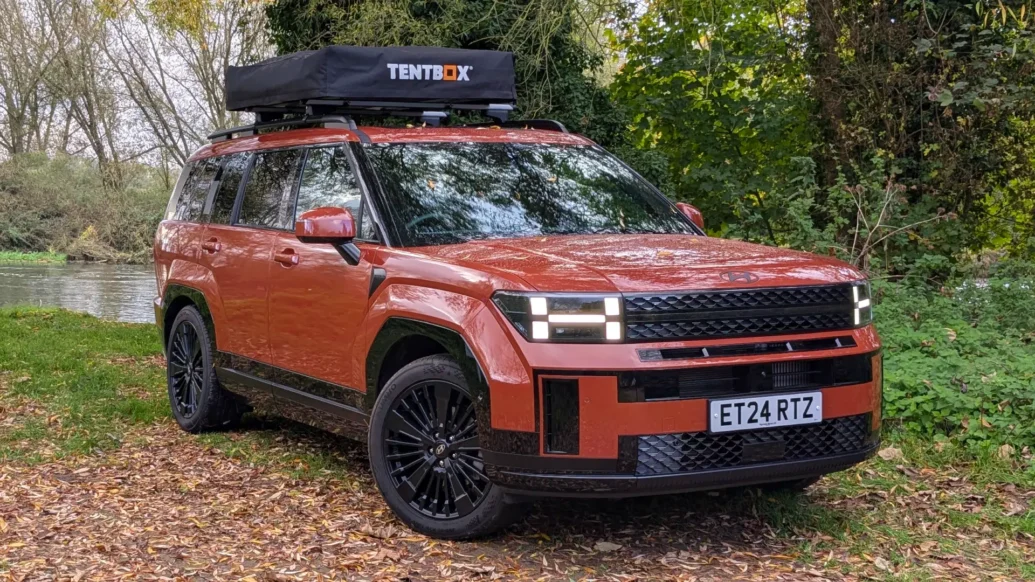
What if your next holiday didn’t need a hotel booking, campsite reservation or even a tent peg? That’s the idea behind Chabak, the Korean car-camping trend that’s now made its way to the UK. And what better way to try it than with the Hyundai Santa Fe Hybrid, especially when it comes kitted out with a factory-fitted roof tent and all the gear to turn a family SUV into a mobile retreat?
We took the top-spec Calligraphy model on a long road trip across the UK, clocking up hundreds of miles and nights under canvas — or rather, high above it.
Spoiler alert: it’s brilliant.
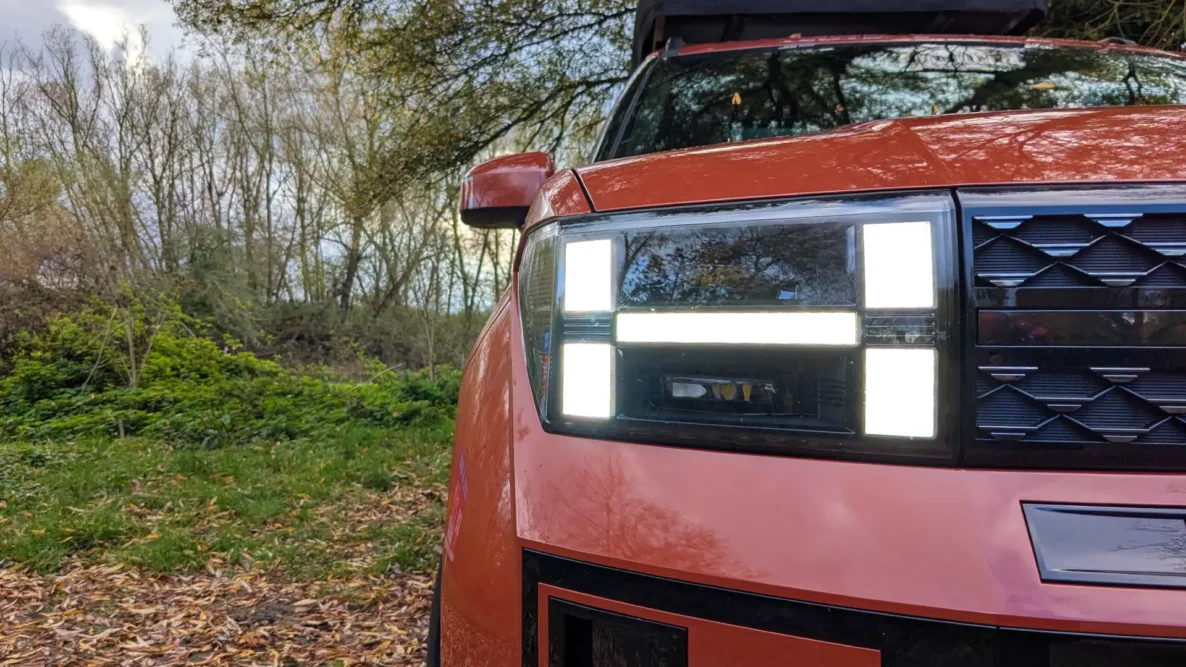
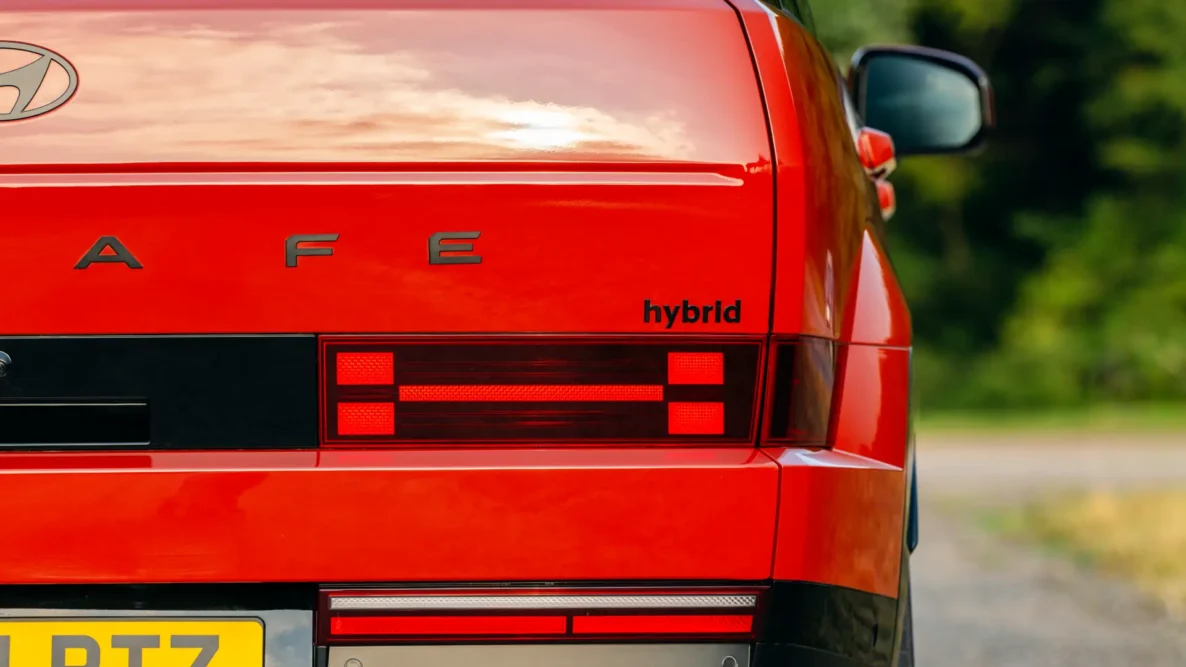
Even without the Chabak extras, the new Santa Fe is one of the most distinctive family SUVs on sale. Hyundai has ditched the soft curves of previous models and embraced straight lines, sharp edges and a stance that’s more Tonka truck than toy car. The H-shaped lights at both ends give it a futuristic face, but everything else is unapologetically blocky, and in a sea of smoothly sculpted SUVs, all the better for it.
Hyundai design chief Simon Loasby says it’s “a brick” built to give maximum interior space and a huge roof platform, both perfect for car camping. That’s no accident either; the Santa Fe was designed during lockdown, inspired by Korean adventurers who wanted to escape into nature without giving up their home comforts.
Living the Chabak life
Our Chabak edition Santa Fe came with a Tentbox Lite 2.0 rooftop tent system, which folds out with ease to reveal a cosy sleeping platform, complete with a ladder and a built-in mattress. Setup takes moments; there are no pegs, poles or panicked instructions, with the fold-down system able to be handled, at a push, by one person. Once unfolded and the ladder attached, the view from the tent is, quite literally, a highlight.
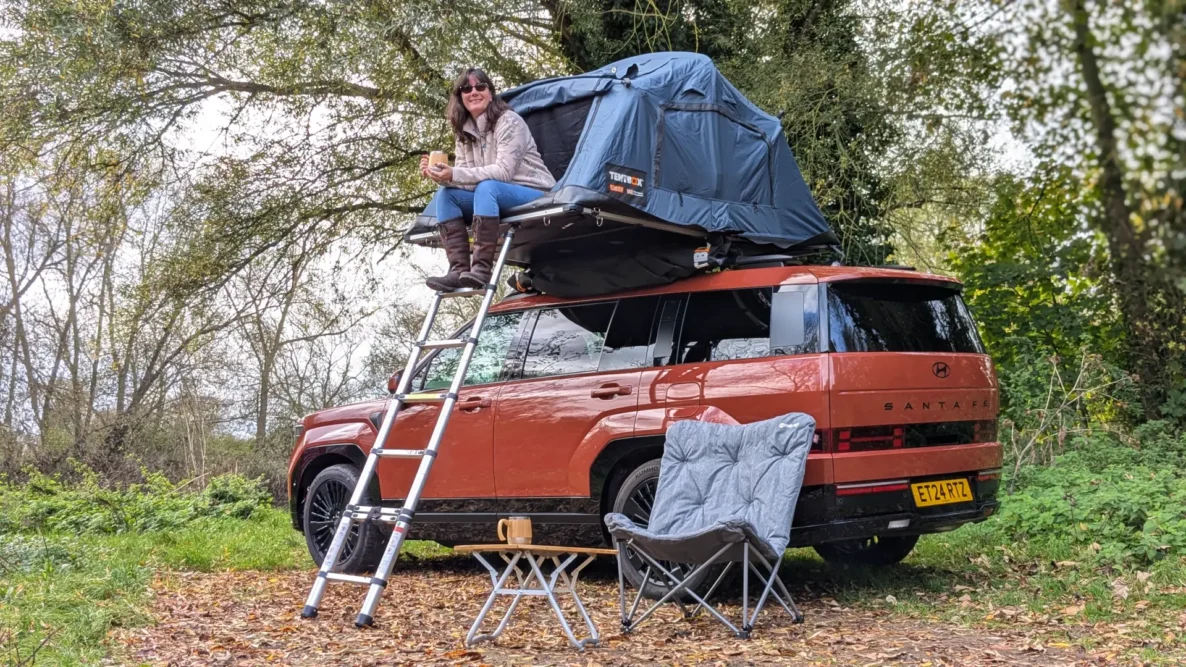
We packed up and drove through the countryside, stopping wherever took our fancy. The tailgate acts as a terrace, the plug sockets and USB-C ports keep everything charged, and the in-car tech makes it feel more like a posh glamping pod than a car. The powered second-row seats flatten at the push of a button, had we fancied sleeping inside instead, and, yes, it’s long and wide enough for two full-grown adults to kip in comfort. Ok, maybe not quite as full-grown as me (note to self: look up diet plans), but it’ll do for a night away.
We even had onboard WiFi for streaming by starlight. If this is camping, we’re sold.
Hyundai Santa Fe: The drive
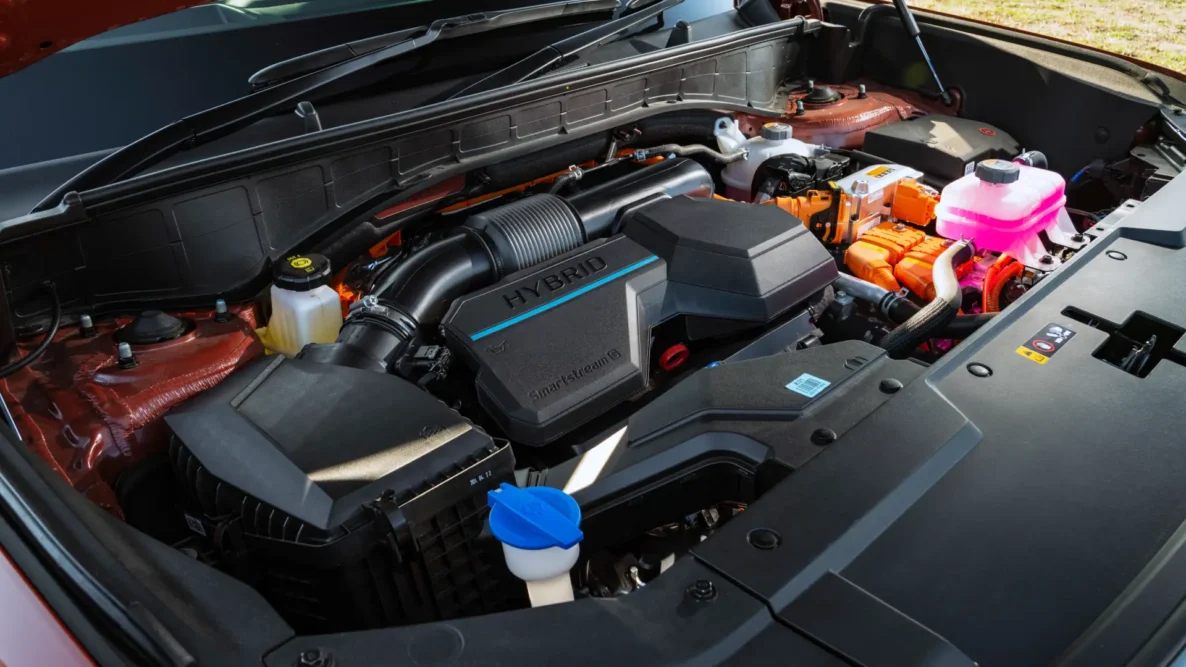
Power comes from a 160hp 1.6-litre turbo petrol engine with a 65hp electric motor. It’s not fast, but it doesn’t need to be. It’s smooth, pleasingly quiet most of the time, and effortlessly wafts along on motorways or country roads. Our real-world fuel economy sat at 36.2mpg, remarkably close to Hyundai’s official 38.6mpg claim, which is impressive considering the large tent box on top that undoubtedly ruins the surprisingly sleek aerodynamics.
You do feel the size of it in tighter spots, but the Santa Fe makes up for it with excellent visibility, a suite of parking cameras and light, accurate steering. The steering and power delivery are tuned for comfort, not corners, so it’s no sports SUV, but it’s pleasant to drive and deals with lumps, bumps and potholes better than most big cars on 20-inch wheels.
The 4WD system means you’ll get out of muddy fields and handle wintry conditions with confidence, though it’s not a proper off-roader like a Defender. This isn’t for green-laning, it’s for green fields and glamping.
For Chabak adventures, it’s ideal: relaxing, easygoing, and surprisingly nimble for a 7-seater with a spare bedroom on the roof.
Inside the Hyundai Santa Fe
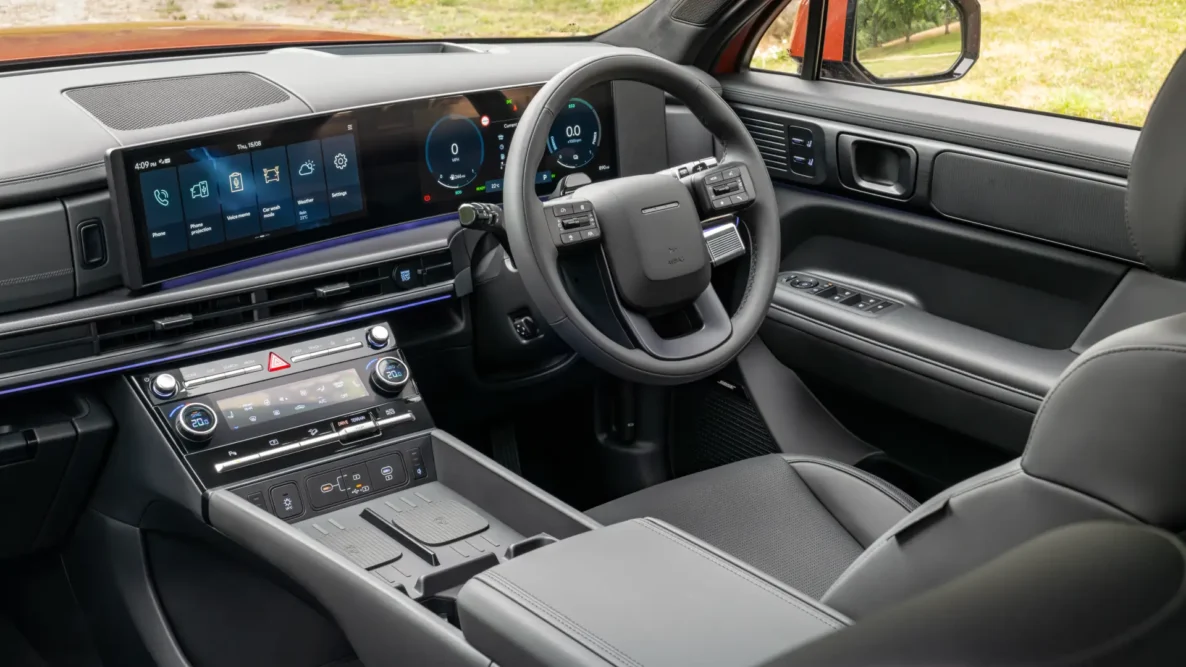
Step inside, and you could be forgiven for thinking this was a premium German SUV. The materials feel classy, the layout is intuitive, and the screens — a 12.3-inch instrument cluster and 12.3-inch infotainment panel — are pin-sharp and genuinely useful. There are also physical buttons for climate control (something I’m very pleased about), twin wireless chargers and one of the biggest centre storage bins we’ve seen.
The Calligraphy trim we tested adds luxury touches, such as Nappa leather, relaxation seats, sunshades, and even ingenious hidden grab handles on the outside to make it easier to reach the roof tent.

Storage, in general, is off the charts. We found 18 cup and bottle holders scattered around the cabin, deep door bins, and even a UV-sanitising glovebox.
I don’t want to know why you need to sanitise things after a night in the Chabak. Really, I don’t.
Rear-seat passengers are treated to plenty of luxury, too, especially if you pick the six-seat version with captain’s chairs. USB-C ports are embedded in the seatbacks, there’s loads of legroom, and access to the third row is genuinely easy thanks to electric folding second-row seats. Even adults can fit in the back two seats, although they won’t thank you after an hour or so.
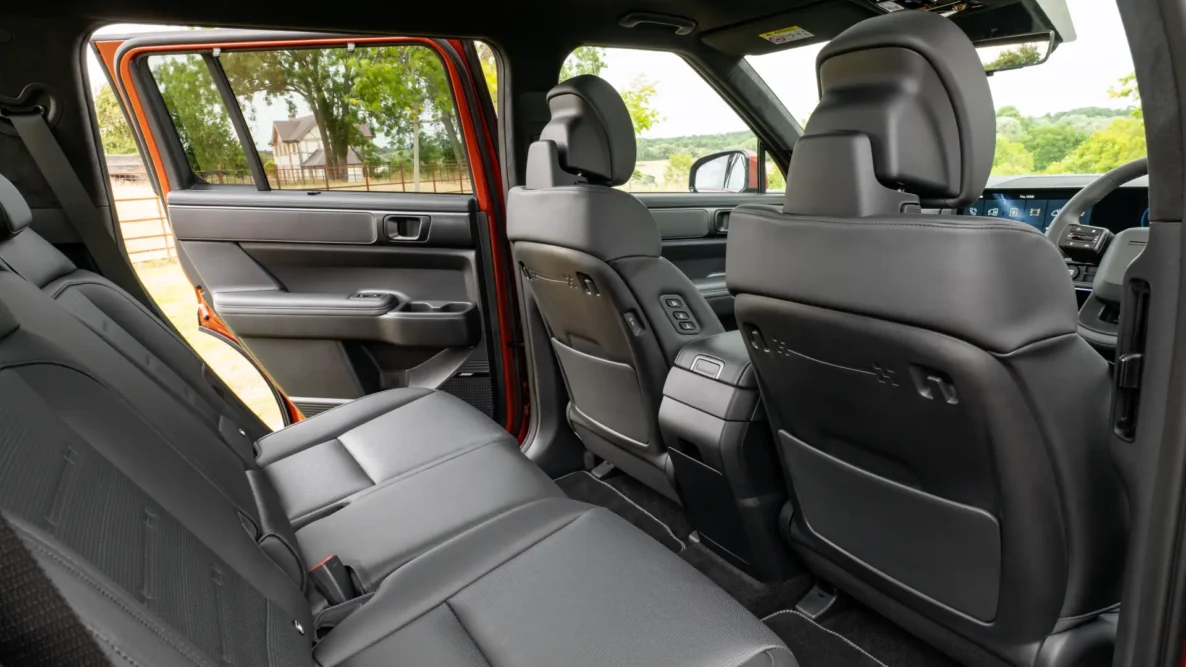
With the third row of seats folded down, you’ll get 628 litres of boot space — more than a Kia Sorento and not far off a Volvo XC90. Flatten the lot, and you’ve got a 1,949-litre flatbed that’s perfect for loading gear or stretching out inside.
Hyundai Santa Fe Hybrid: The verdict
The Hyundai Santa Fe Chabak isn’t just a marketing gimmick. It’s a smart, stylish SUV that blends real practicality with unexpected luxury, topped off with a roof tent that genuinely transforms how you use the car.
It’s not cheap — prices start from £46,775, and our Calligraphy test car was over £54k — but it undercuts traditional premium rivals by tens of thousands and offers more space, more equipment and more versatility than most. And unlike an Audi Q7 or BMW X5, it won’t feel out of place at a forest campsite with your boots still muddy from the morning hike.
If you want a family car that can handle school runs on Monday, road trips on Friday, and stargazing on Saturday, this might be the ultimate mobile base camp.
Model tested: Hyundai Santa Fe Hybrid 4WD Calligraphy
Price: £54,830
Average Joes rating: ★★★★★

He is the founder of Huff Media, publisher of Professional Pickup, Professional Van, Average Janes, Average Joes, and CALIBRE. His work focuses primarily on light commercial vehicles, pickups, and real-world vehicle use, with much of his time spent on manufacturer launches, industry events, and long-term vehicle testing.