
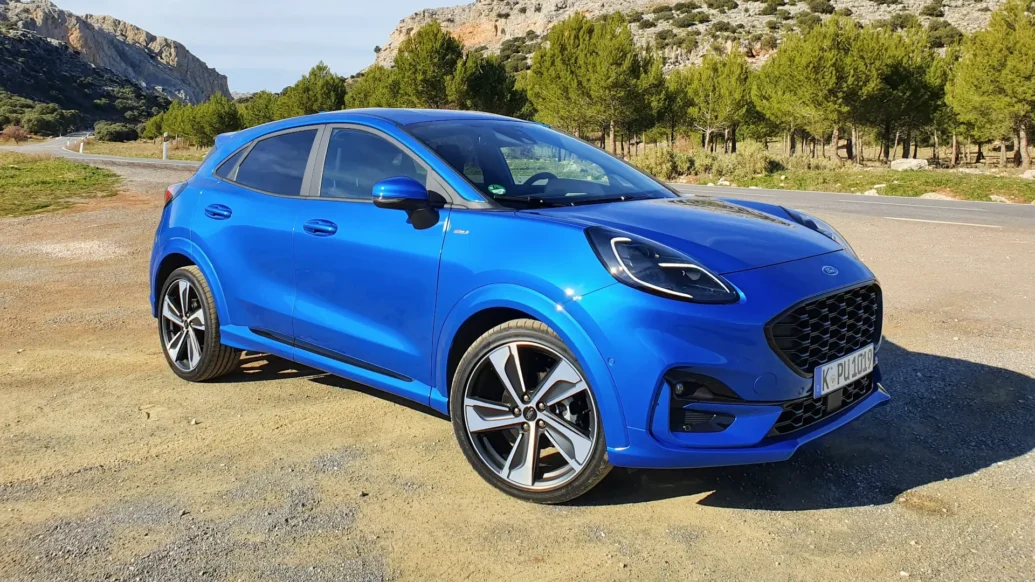
Enthusiasts look away now; this is clearly not a replacement for the two-door sporty coupe of the late 90s. That said, while the new Puma has morphed into an on-trend SUV, Ford has worked hard to ensure it drives with the verve you would expect from something bearing the Puma name.
As with many small SUVs, the looks could be described as divisive. It works for me, but others have been unkind about the front end. Still, few people had anything kind to say about the original Nissan Juke, and that went on to sell by the boatload. I suspect Ford can look forward to even greater sales success…
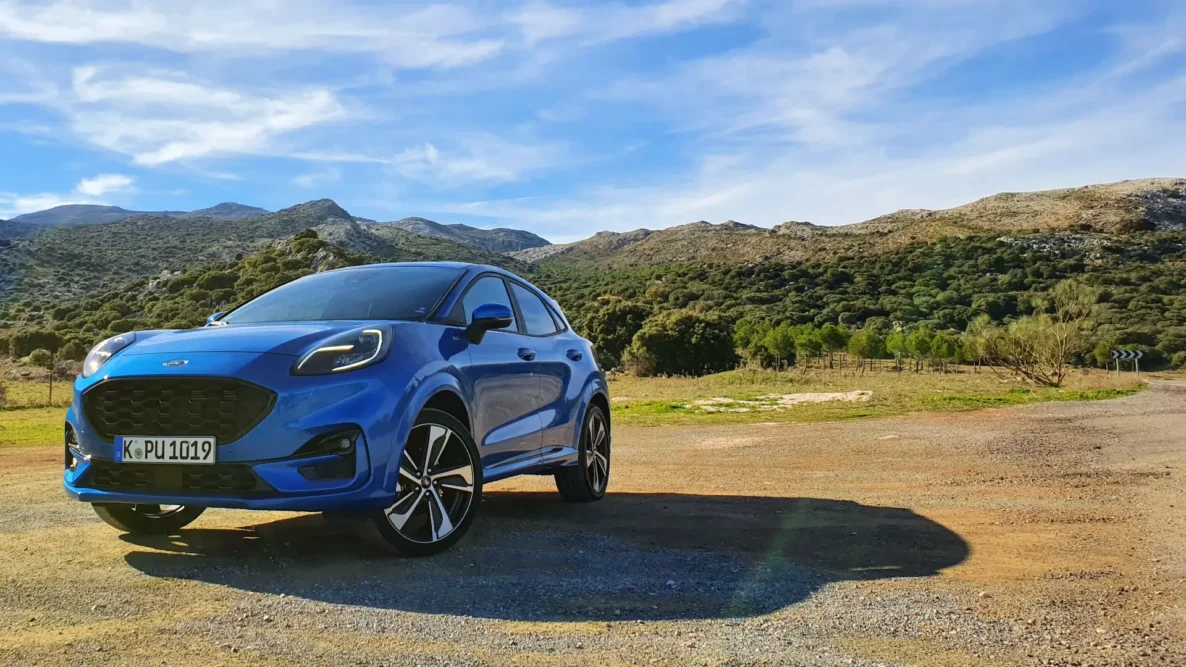
There’s a little 1.0-litre three-cylinder petrol engine under that high bonnet, with a very mild-hybrid system bolted on to it. That results in 155hp on this ST-Line X model, but there’s also a cheaper 125hp option to choose from. Each promised more than 50mpg, and each offers less than 100g/km of CO2 emissions, so preferences should come down to cost and performance — the 0-62mph time of 9.0 seconds for the 155hp model isn’t too shabby, but you only give away 0.8 seconds by opting for the cheaper version.
Venture to the wilderness, and the SUV part of the car is left wanting. There’s no four-wheel drive, no off-road modes, and no all-weather tyres. This is a car for the road then, but it’s all the better for it; Ford’s engineers have managed to pick up the Firsta’s keen handling, a car on which the Puma is based, and kept much of the fun despite the raised ride height.
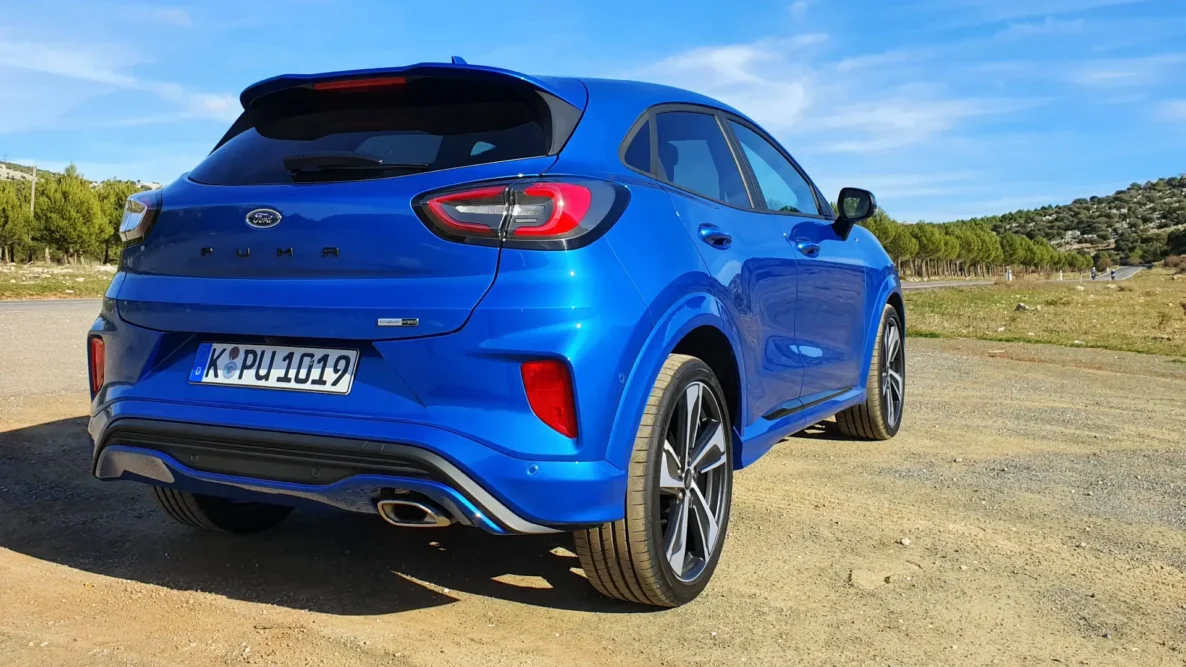
It turns in well, controls body roll well, stops sharply, and reacts as you would expect. There are Goodyear Eagle F1 tyres fitted that offer astonishing grip in the dry, but on a very cold and damp road, the Puma can surprise: the rear can slide wide if you back off the throttle sharply. While that’s quite fun in a controlled environment, it’s pleasing that the computers soon gather it all up and return you to the straight and narrow.
There’s usually a penalty paid in ride quality for such handling prowess, but the Puma is comfortable enough. Yes, it’s a little stiffly sprung, and the low-profile tyres and 18-inch wheels certainly impact it marginally, but nobody will feel it’s too hard. The smaller-wheeled Titanium model is marginally softer, but there’s not much in it.
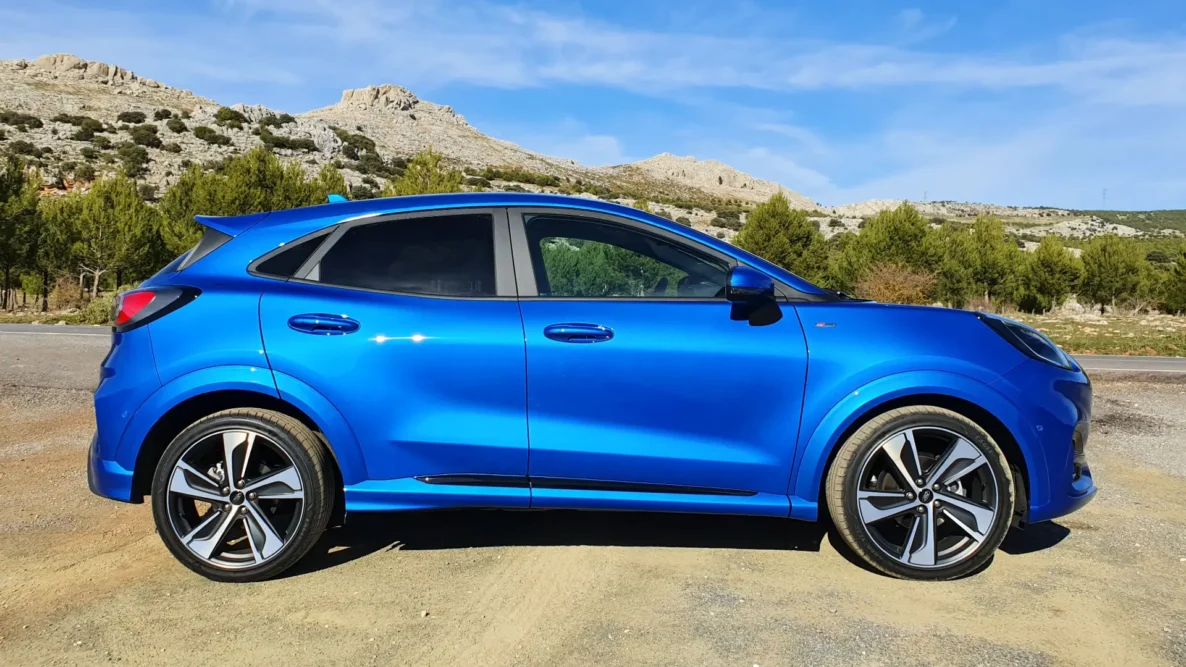
Driving dynamics just about hold up to the Puma name, then, but what about the SUV side of things? A bulky box of a car, even if the Puma is just 14cm longer than a Fiesta, needs to be a practical machine. Fortunately, the Puma’s got that covered.
The cabin itself is spacious enough, if functional rather than exciting, with a suitable amount of elbow, leg, knee and headroom. That is, until you get a panoramic sunroof, which cuts into the available height enough to upset a six-footer. Equipment levels are high, though that’s because Ford is starting the range at the high-spec Titanium level, leaving very little to choose from the options list.

It’s even fitted a long list of safety gear to the car as well, with a reassuring five-star EuroNCAP crash safety rating.
And then there’s the boot. Ford has introduced a genuinely innovative and useful feature: the MegaBox. It’s a grand name for what is really a hollow box under the boot floor, but it’s something buyers will use. Remove the false floor, and there’s an extra 80 litres of storage that goes right down to the underside of the car.
It’s deep enough to stand a golf bag or plants upright in it. Going camping? Fill it with ice and throw some beer bottles in there, as there’s a plug to drain the water out. Been hiking? It’s somewhere to store your muddy boots or even wash down a dog.

It’s odd to get excited about what amounts to a hollow plastic cube in the boot, but useful innovations are few and far between these days. The Puma is good enough that it doesn’t need a talking point, but you’re going to want to show off your box to everybody.

He is the founder of Huff Media, publisher of Professional Pickup, Professional Van, Average Janes, Average Joes, and CALIBRE. His work focuses primarily on light commercial vehicles, pickups, and real-world vehicle use, with much of his time spent on manufacturer launches, industry events, and long-term vehicle testing.