
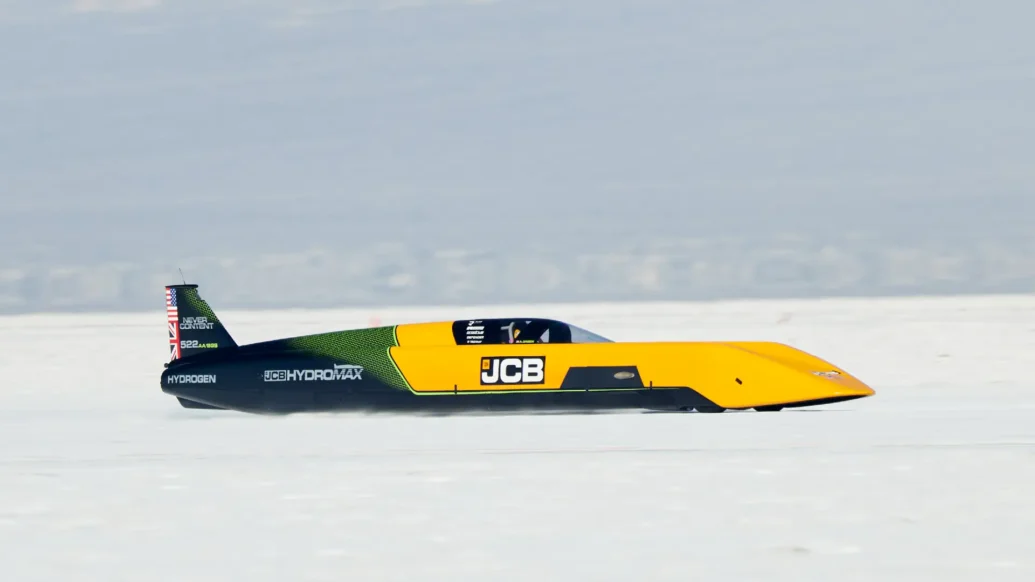
When we last encountered the JCB Hydromax, it had managed 177mph during testing in the UK. That sounded fairly brisk for something powered by a pair of digger engines.
It turns out JCB was barely getting started.
The 10-metre hydrogen-powered streamliner has now reached more than 400mph across the Bonneville Salt Flats, setting a new FIA land speed record for a hydrogen combustion vehicle.
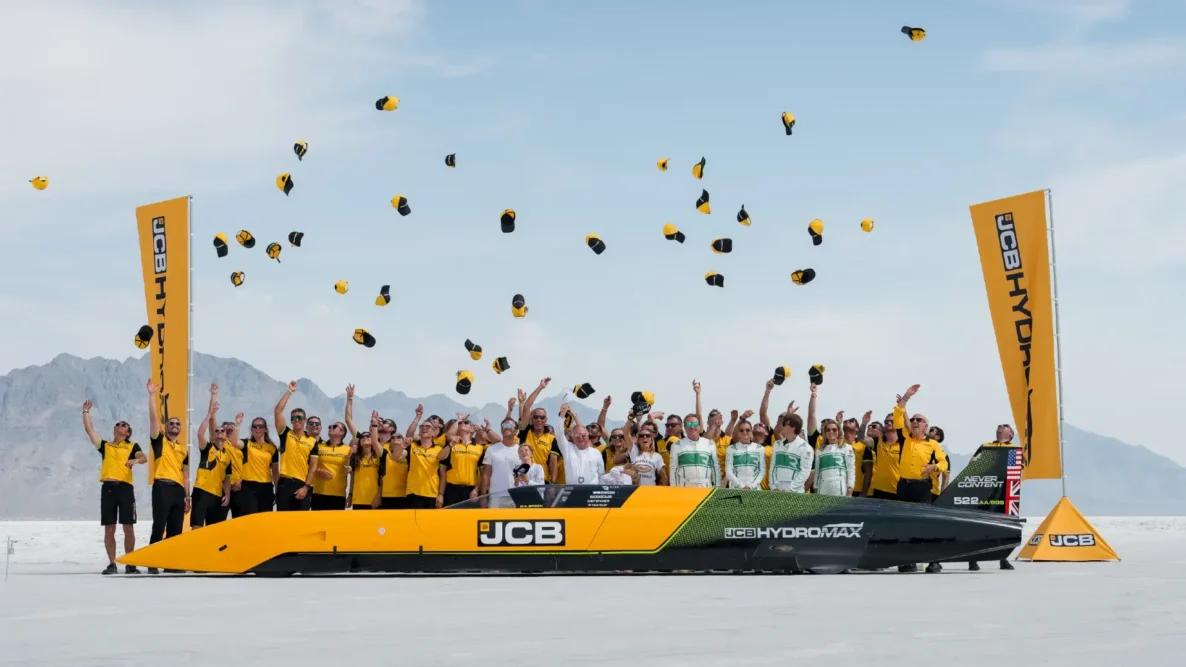
Wing Commander Andy Green completed two runs in opposite directions within the required one-hour window, recording 400.623mph on the first and 412.135mph on the second. The resulting record average speed of 406.320mph remains subject to official FIA ratification, but comfortably beats the previous 185.5mph hydrogen combustion benchmark established by BMW’s H2R in 2004.
It also eclipses the 303mph achieved by a hydrogen fuel-cell vehicle, making Hydromax the fastest hydrogen-powered vehicle of any kind.
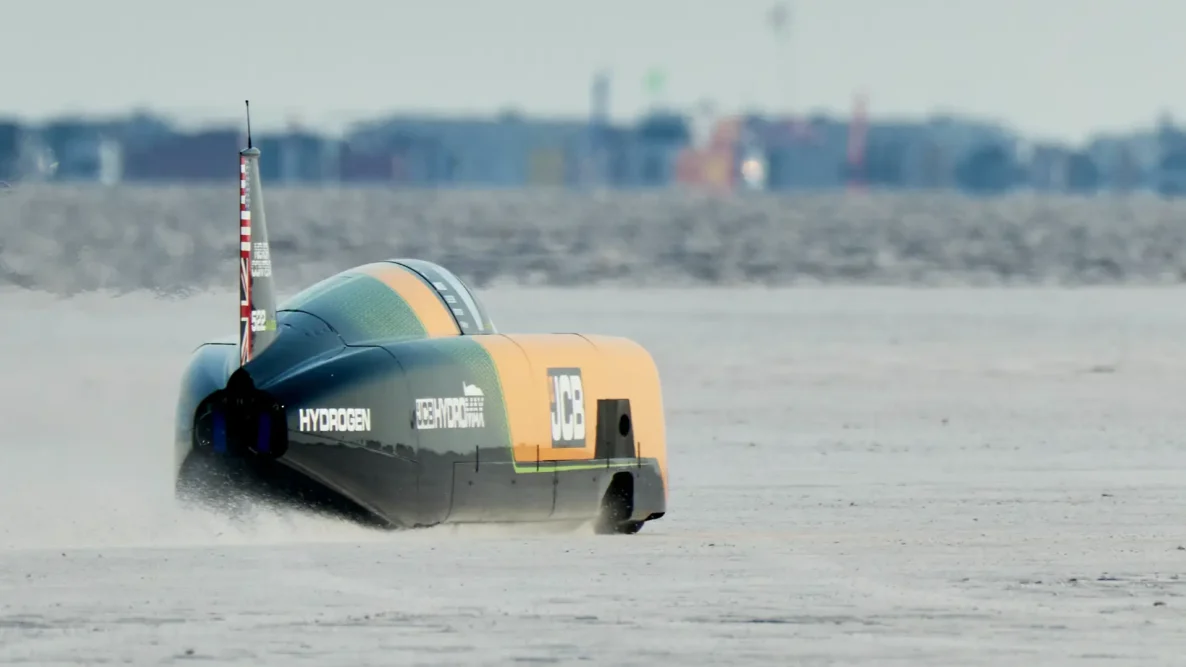
Faster than JCB’s diesel record
The achievement comes almost exactly 20 years after Green drove the JCB Dieselmax to 350.092mph on the same salt flats.
That diesel record still stands within its own FIA category, but Hydromax has now gone more than 56mph faster using two production-based JCB hydrogen engines.
Together, the two engines produce 1,600bhp. They’re derived from the same units JCB is putting into construction equipment as part of its £100 million hydrogen programme, rather than being entirely bespoke racing engines bearing little relationship to anything useful.
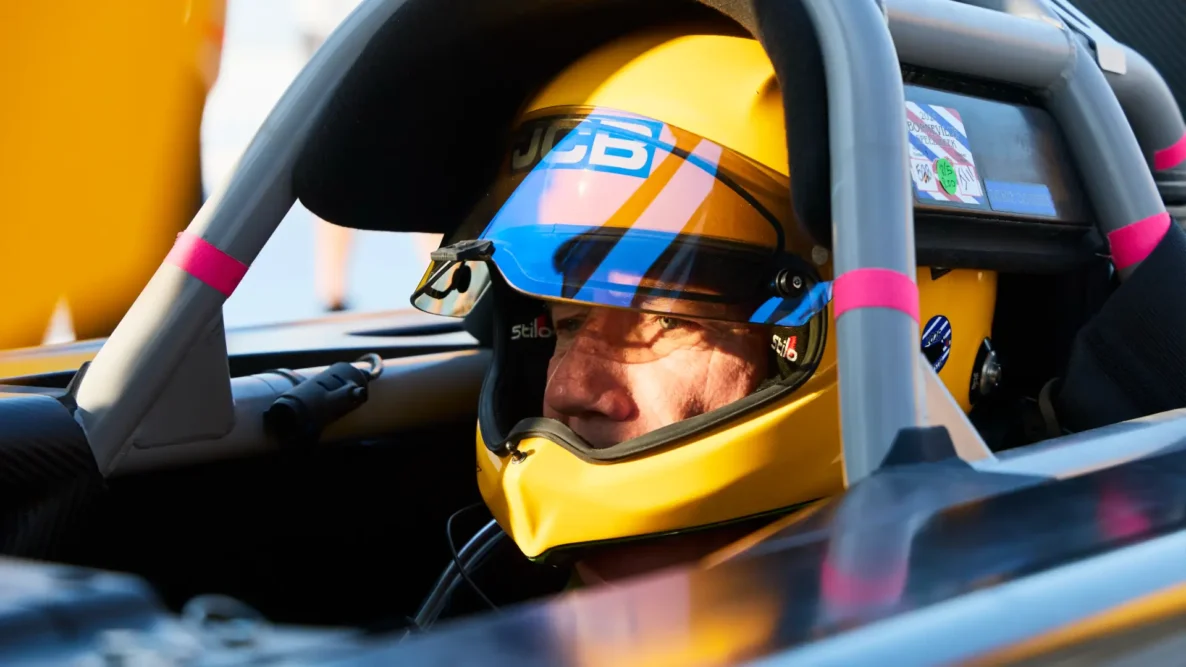
Green said: “Bonneville is the spiritual home of the world land speed record, and JCB Hydromax has just written itself into that history. The car was terrific — stable, strong and fast.
“Setting a world land speed record with hydrogen power, 20 years after Dieselmax, is a huge privilege.”
From 177mph to 406mph
Hydromax had already given a fairly large clue about its potential during Bonneville Speed Week, where it reached 368.347mph and established an SCTA record in the Blown Gas Streamliner class.
The official FIA attempt pushed it another 38mph beyond that.
It doesn’t prove that hydrogen combustion is suddenly the answer for every car, van or excavator.
What it does prove is that JCB can make a pair of digger-based hydrogen engines propel a 32-foot car beyond 400mph. Whatever your view of hydrogen, that’s a wonderfully excessive piece of British engineering.
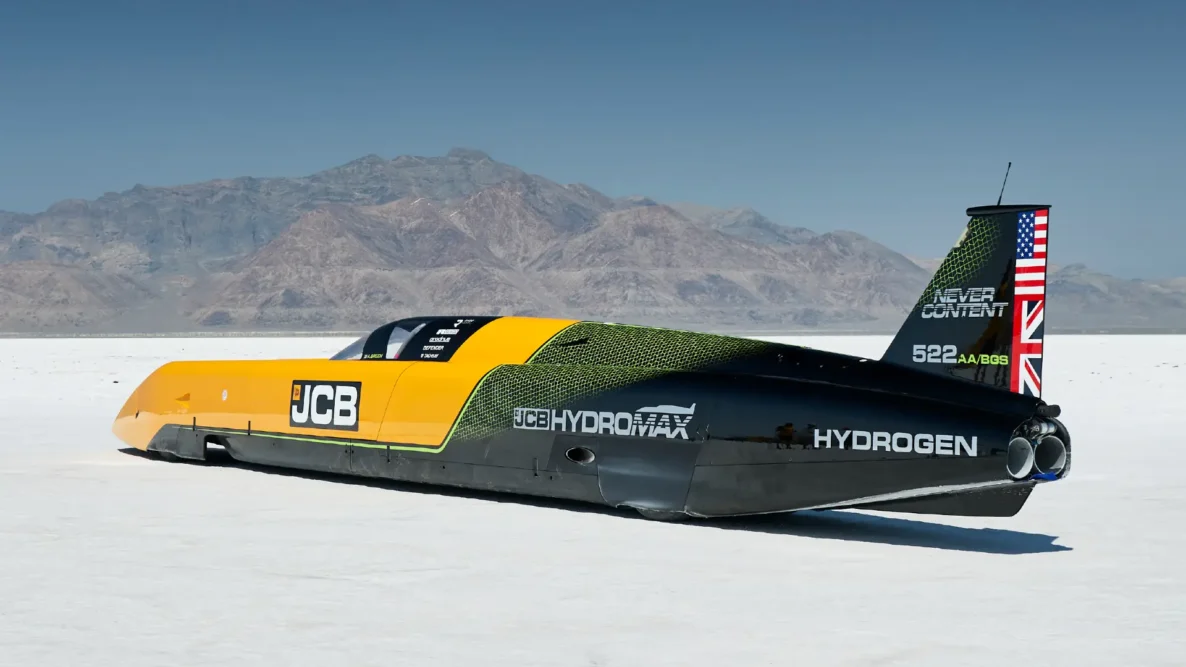
Green remains the fastest person ever to travel on land, having driven ThrustSSC through the sound barrier at 763.035mph in 1997. Hydromax was never chasing that record, but 406.320mph is still quite an escalation from the 177mph we saw two months ago.

He is the founder of Huff Media, publisher of Professional Pickup, Professional Van, Average Janes, Average Joes, and CALIBRE. His work focuses primarily on light commercial vehicles, pickups, and real-world vehicle use, with much of his time spent on manufacturer launches, industry events, and long-term vehicle testing.
- Digger-engined JCB Hydromax smashes 400mph land speed record - 24 August 2026
- Nissan’s Formula E secret weapon is 6,000 miles away from the racetrack - 8 August 2026
- JOE LOVES Kia Stonic review: Forgettable, but in the best possible way - 5 August 2026