
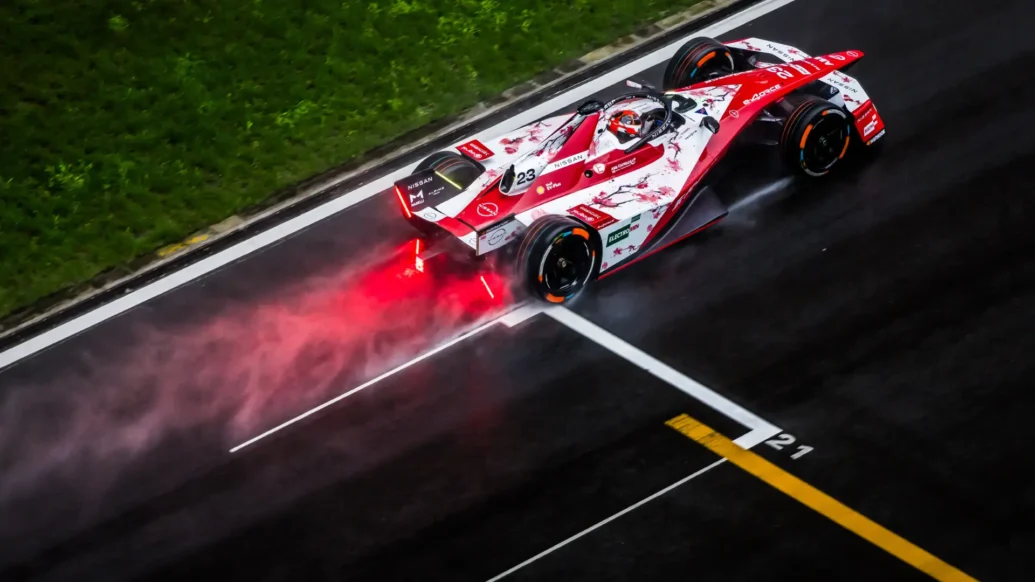
Formula E might be fought out on the streets of London, Tokyo and São Paulo, but some of Nissan’s most important race-weekend work happens in a room in Paris.
While Oliver Rowland and Norman Nato are strapped into their Nissan Formula E cars, another small team can be thousands of miles away, hammering around a virtual version of the same circuit in one of the most advanced driving simulators around.
There’s a bit more to it than a PlayStation 5 and a Logitech wheel.
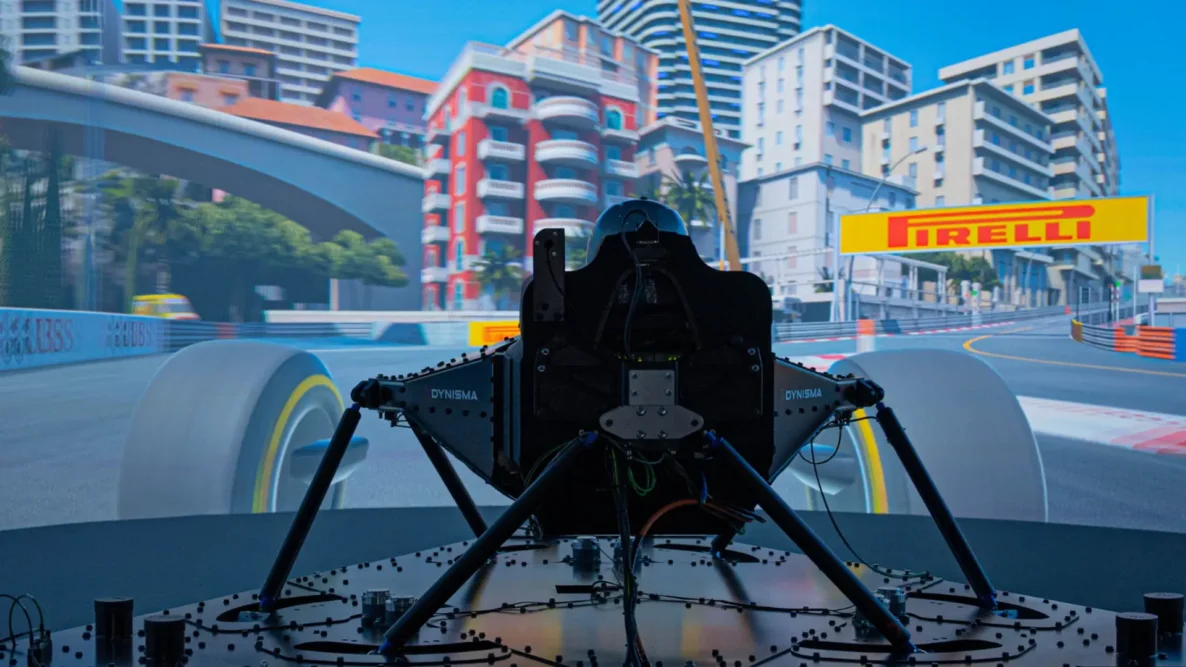
Nissan Formula E Team’s Dynisma DMG-1 simulator is a serious bit of engineering kit, used to prepare drivers before a race, react to changing track conditions during the weekend and, increasingly, develop the next generation of Formula E car.
It’s also one of the reasons Nissan turns up at a circuit already knowing rather more than you might expect.
Why Formula E needs a simulator
Simulation is important in most forms of modern motorsport, but Formula E makes it particularly valuable.
Teams get very little real-world testing ahead of each season, while many races take place on temporary street circuits which can change considerably from one visit to the next. Roads get resurfaced, kerbs move, corners are altered and the bumps encountered by everyday traffic become part of a racing line.
There isn’t much opportunity to turn up a week early and quietly do a few laps.
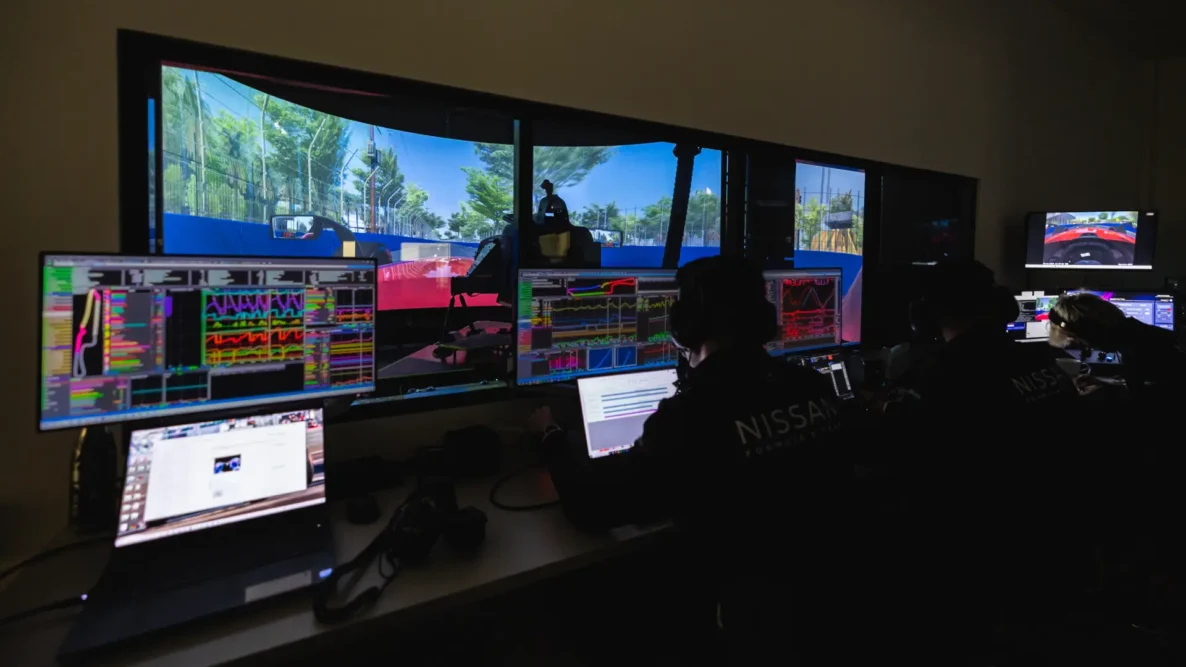
Instead, drivers and engineers will walk the circuit before running begins, spotting any changes and feeding that information back to Nissan’s headquarters in Paris.
The simulator team can then alter its virtual circuit and start working through setup and strategy options before the actual race cars have even left the garage.
“The ability to run highly accurate simulations is crucial not only for race preparation but also for car and powertrain development,” explains Nissan team principal Tommaso Volpe. “This new simulator is already helping us accelerate our engineering process, validate software and optimise the car long before we reach the circuit.”
Meet Nissan’s other Formula E drivers
Oliver Rowland and Norman Nato might be the names above the race track garages, but Nissan has two more British drivers doing a lot of the work behind the scenes.
Former Formula E race winner Sam Bird is Nissan’s reserve and development driver, while F1 Academy champion Abbi Pulling works as a rookie and simulator driver.

Bird spends the weeks before a race running through setup and strategy work so that Rowland and Nato aren’t starting from scratch when they eventually climb into the simulator themselves.
“My role is to ensure that both Oli and Norman have everything that they would require when they jump in and do their testing in the simulator,” says Bird. “The sim is an awesome piece of kit. It gives us all the things that we need to sense movement and g-force and it feels very closely related to being in the physical car itself.”
Pulling then steps in to become part of Nissan’s remote race-weekend operation.
Depending on where Formula E happens to be racing, that can involve distinctly antisocial working hours. Events in places such as Tokyo and São Paulo can be almost 6,000 miles away from Nissan’s Paris base.
It effectively gives Nissan another car that never needs tyres, never runs out of battery and can be driven over and over again while the real cars are sitting in the garage.
It’s not Gran Turismo
There is, admittedly, a lovely bit of symmetry here.
Nissan launched GT Academy back in 2008, attempting to turn Gran Turismo players into real racing drivers. More than five million people entered the programme, with its most famous winner, Jann Mardenborough, going on to race at a global level for 15 years, and even having a Hollywood movie made about him.
Mardenborough started his career with a PlayStation 3, but the simulator Nissan uses today is on another planet technologically.
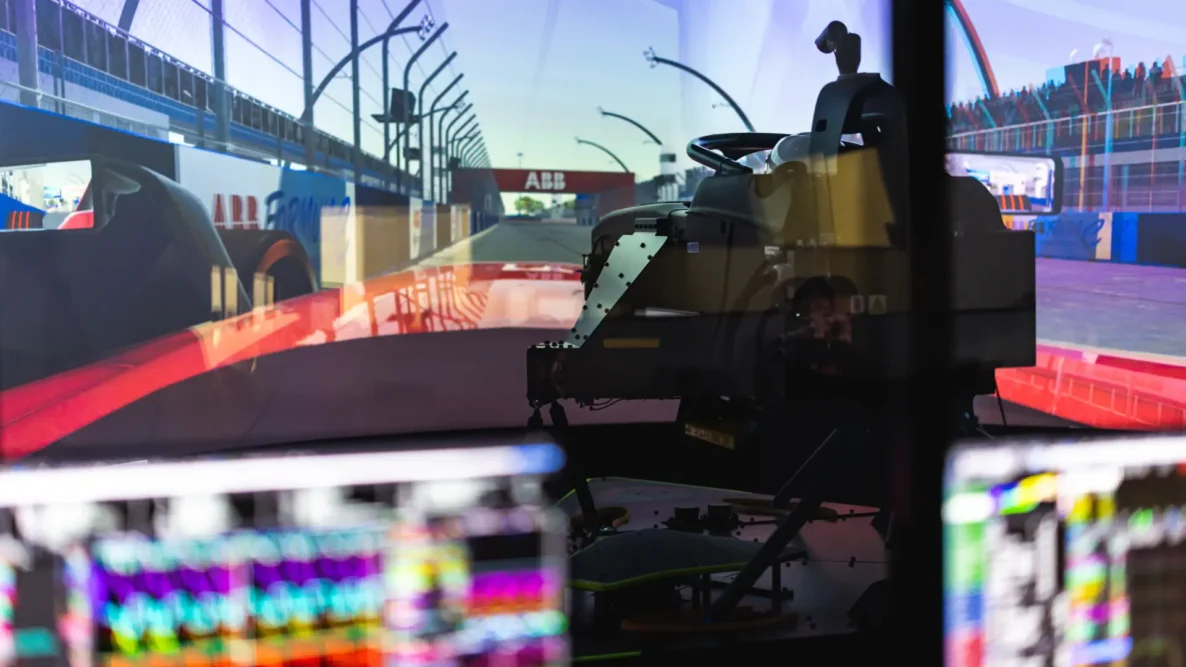
Built in Bristol by Dynisma, the DMG-1 responds to inputs in less than five milliseconds and can reproduce the movements, vibrations and changes in balance that drivers would experience in the actual car.
That’s important, as drivers need to feel what happens as the car switches between putting power through the wheels and recovering energy under regenerative braking. Tiny changes in balance can make the difference between clipping a wall and threading the car through a street circuit cleanly.
Kerbs, weight transfer, changes in grip and the car moving around under braking all need to feel believable enough for a professional driver to trust what the simulator is telling them.
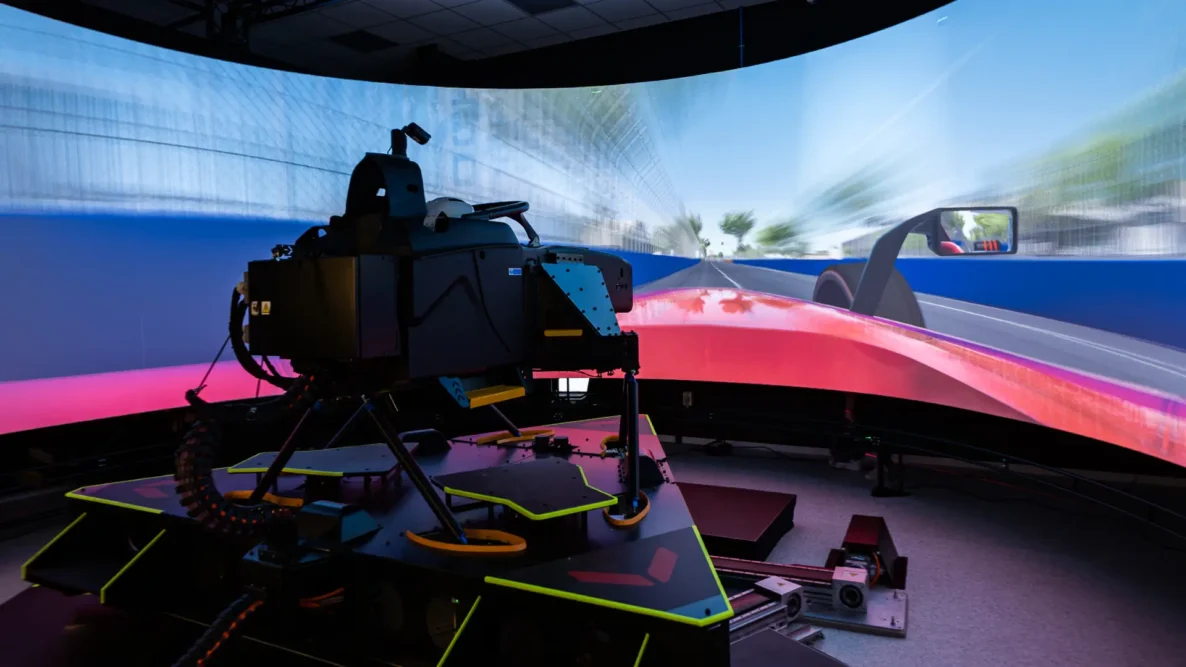
Rowland reckons Nissan has got it pretty close.
“I have been running simulators in different series for 10-15 years, and the Dynisma is the best in the business,” he says.
With only limited practice before qualifying, he adds, simulator work allows the team to understand the circuit and prepare the car’s systems before arriving at the track.
Or, put another way, you really don’t want the first time your driver discovers a particular corner is tricky to be while travelling towards a concrete wall at 150mph.
The simulator is already developing Formula E’s future
Nissan isn’t only using its shiny virtual race car for the current Formula E season. A significant chunk of its work is now focused on GEN4, the next generation of Formula E machinery that will be raced for the first time at December’s Jeddah ePrix.
And GEN4 is going to be properly quick.
Peak power rises from the current 350kW to as much as 600kW – or 816hp in numbers that make more sense to us – while permanent all-wheel drive arrives alongside active differentials and power steering.
Formula E says the GEN4 car will hit 62mph in around 1.8 seconds and reach 208mph. Not bad for a racing series that was once mocked for drivers swapping cars halfway through a race because the battery couldn’t last the distance.
The problem is that all of that extra hardware makes the car vastly more complicated to develop.
“When you begin designing a new car, especially for GEN4, simulation comes first,” says Nissan Formula E Team director Dorian Boisdron. “If you take it directly to the track, you have a low chance of quickly being in the performance ballpark; it requires so much track time.”
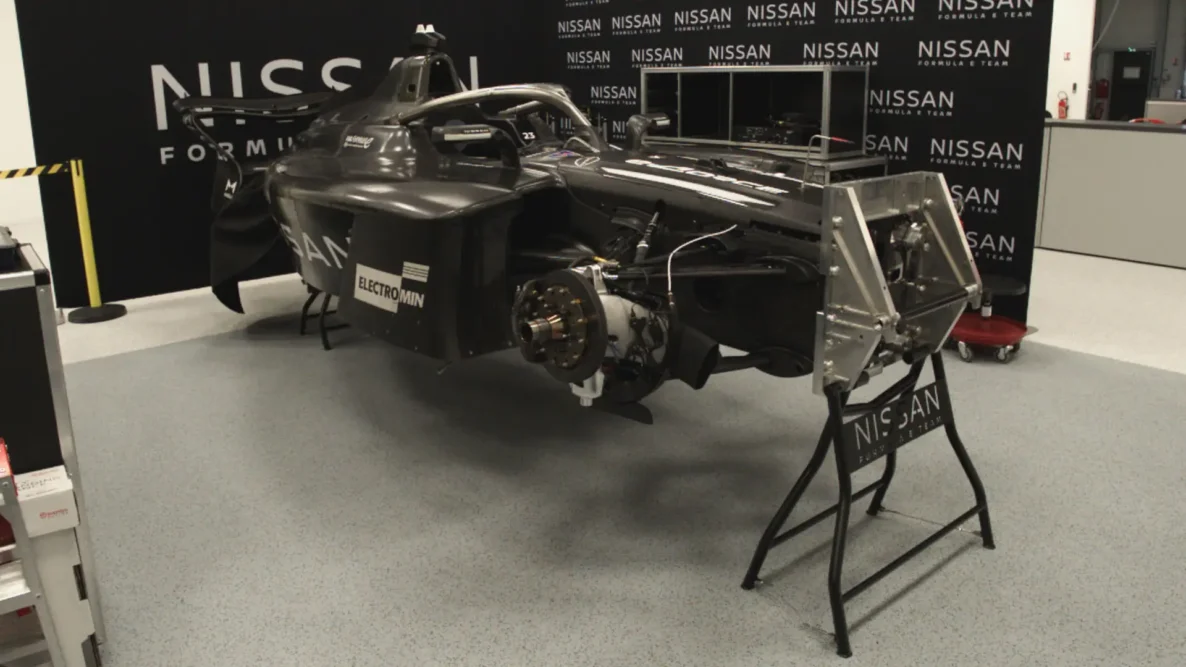
Using the simulator means engineers can arrive at physical tests with much of that experimentation already completed.
It also means fewer cars, engineers and tonnes of equipment need to be shipped around the world merely to find out whether an idea works.
The race behind the race
Watching Formula E from the grandstands, it’s easy to assume the important bit is everything happening in front of you: two drivers, two cars, a garage full of engineers and plenty of laptops.
The reality is considerably bigger.
While Nissan battles for track position, six engineers and a simulator driver can be sitting back in Paris running through alternative versions of the same race, trying setups, validating software and looking for answers that can be sent straight back to the circuit.
Formula E has always blurred the boundary between motorsport and software engineering more than most racing series.
Nissan’s operation shows quite how far that has gone.
The car you see racing might be in London.
A surprisingly important part of the team driving it could still be in Paris.

He is the founder of Huff Media, publisher of Professional Pickup, Professional Van, Average Janes, Average Joes, and CALIBRE. His work focuses primarily on light commercial vehicles, pickups, and real-world vehicle use, with much of his time spent on manufacturer launches, industry events, and long-term vehicle testing.