
There are cars you remember for the noise they make, the way they tackled your favourite country road, or even the things you got up to in the car. Cars that made you feel something.
The Kia Stonic isn’t one of those cars.
In fact, after a week with it, you may struggle to remember very much about driving it at all. That sounds damning, but bear with me, as it really isn’t.
The Stonic quietly gets on with doing what cars need to do, rarely irritates and demands almost nothing from its driver. It is the automotive equivalent of contactless payments. You don’t notice it’s there, you don’t remember tapping, but you’d miss it if it disappeared.
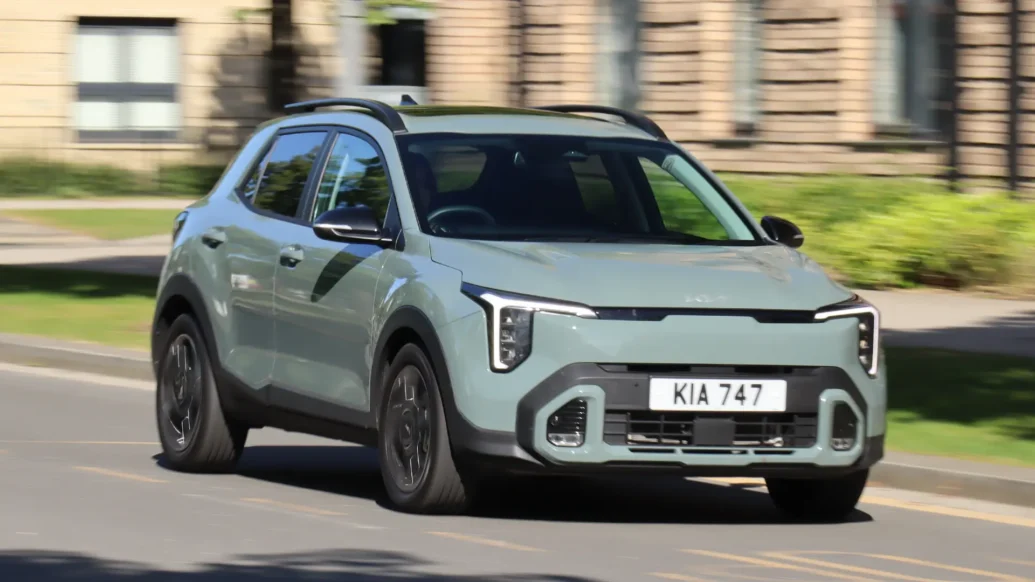
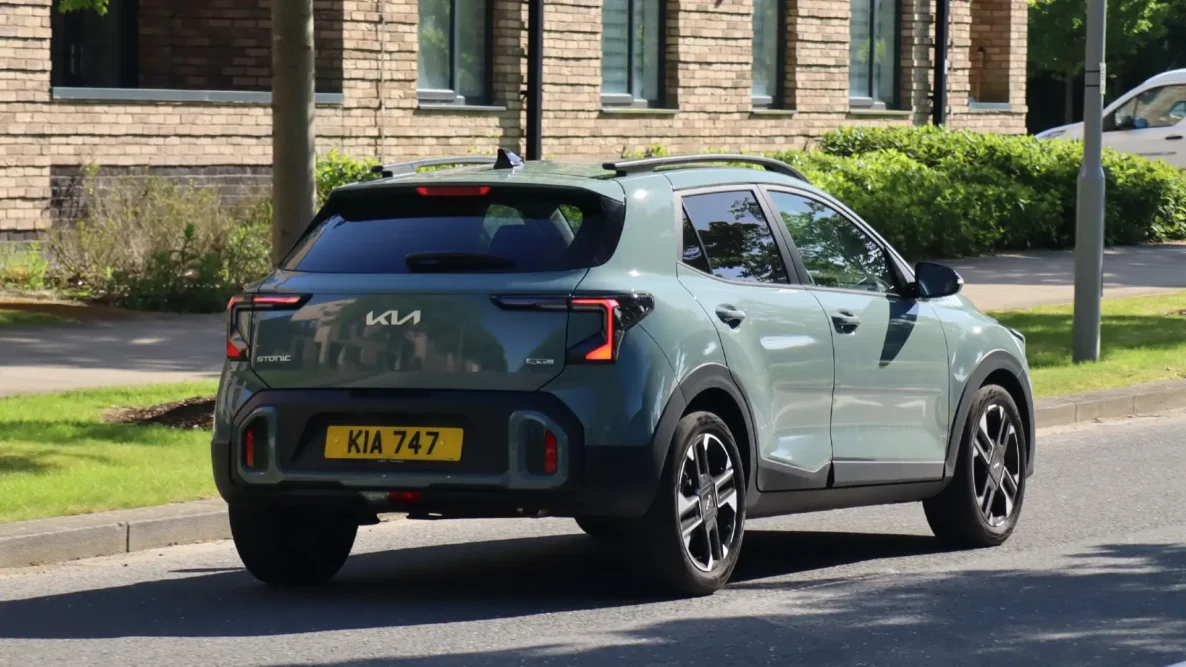
The Stonic has just had an update, giving Kia’s smallest SUV a much sharper face, a thoroughly modernised interior and considerably more technology. Underneath, however, it remains much as it ever was, so it’s closely related to the old Kia Rio supermini, which helps explain why it feels smaller, lighter and more car-like than many of its SUV-shaped rivals.

A small SUV that looks the part
The original Stonic was never exactly ugly, but it did have the slightly anonymous appearance of a car created after someone at Kia typed “small crossover” into ChatGPT.
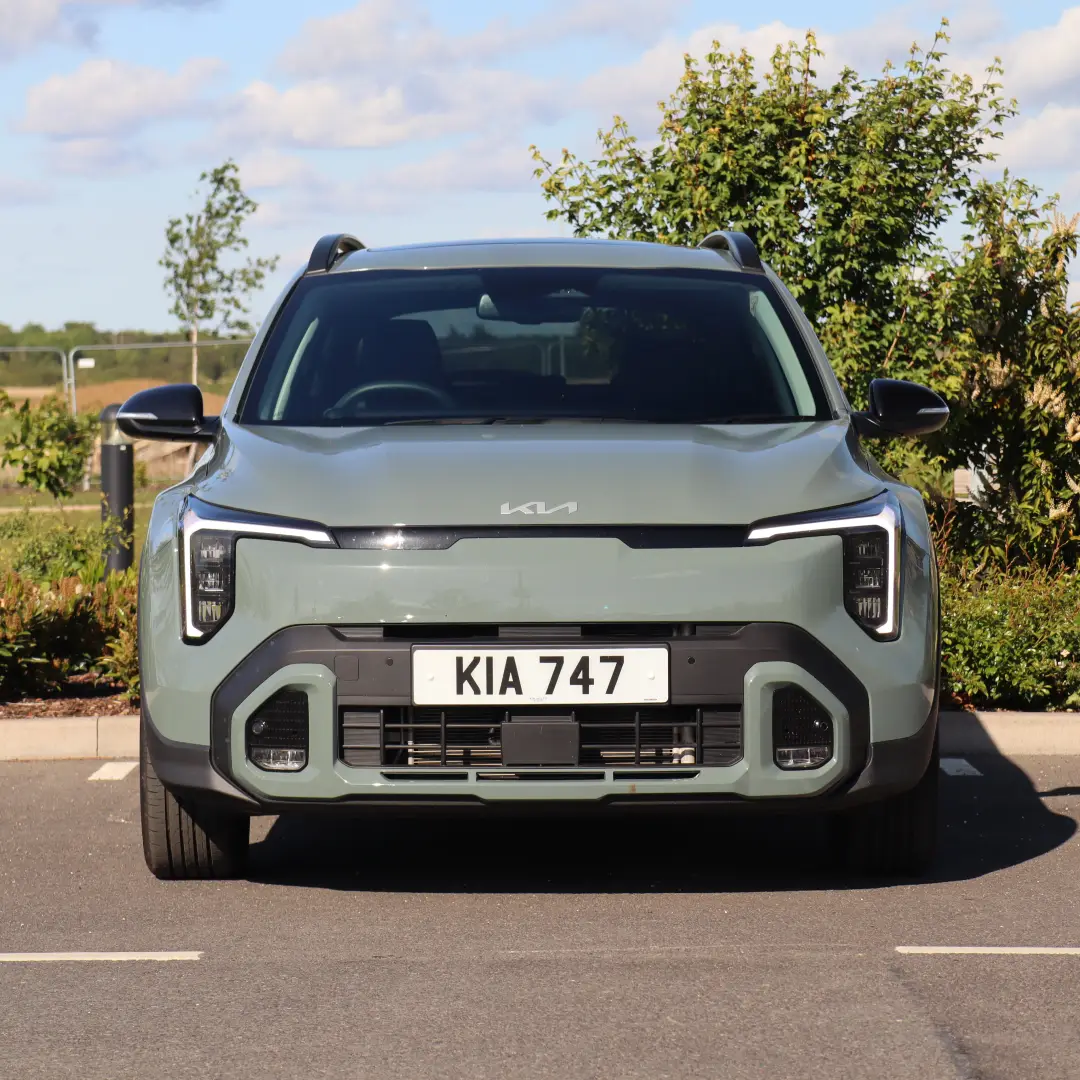
The facelift has given it considerably more presence. Kia’s latest ‘opposites united’ treatment means there’s bold lighting, an angular front end and chunky bumpers that make it look closely related to the brand’s bigger, more expensive models. It’s stylish, but without trying too hard.
The proportions also help. At 4,165mm long and 1,760mm wide, it remains genuinely compact, rather than being a “small SUV” that occupies roughly the same area as a leisure centre.

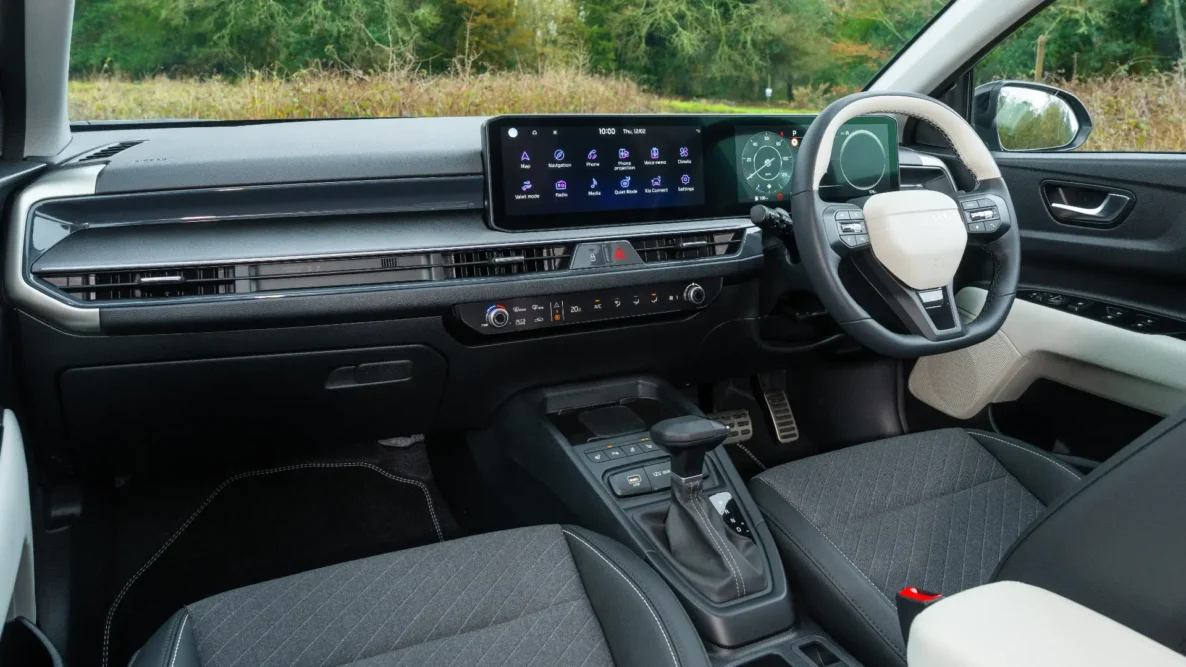
Inside is where the Stonic has made its biggest leap. The GT-Line S gets twin 12.3-inch displays, with one handling infotainment and the other replacing traditional instruments. The graphics aren’t especially exciting, but everything is clear, responsive and easy to understand. That matters far more than whether Pixar has animated the main menu .
.
Kia’s switchable control panel sits below the touchscreen. Press one touch-sensitive button and its knobs operate the heating; press another, and they control the stereo. It sounds like the sort of idea that could become unnecessarily irritating, and on occasion it does just that, but it generally works well and leaves you with proper rotary controls rather than forcing you to jab repeatedly at a screen while bouncing along a B-road.
The steering wheel also retains plenty of physical buttons, including a blessedly simple shortcut for muting the speed-limit warning, which is the sort of thoughtful detail that makes the Stonic notably easier to live with than many newer cars.
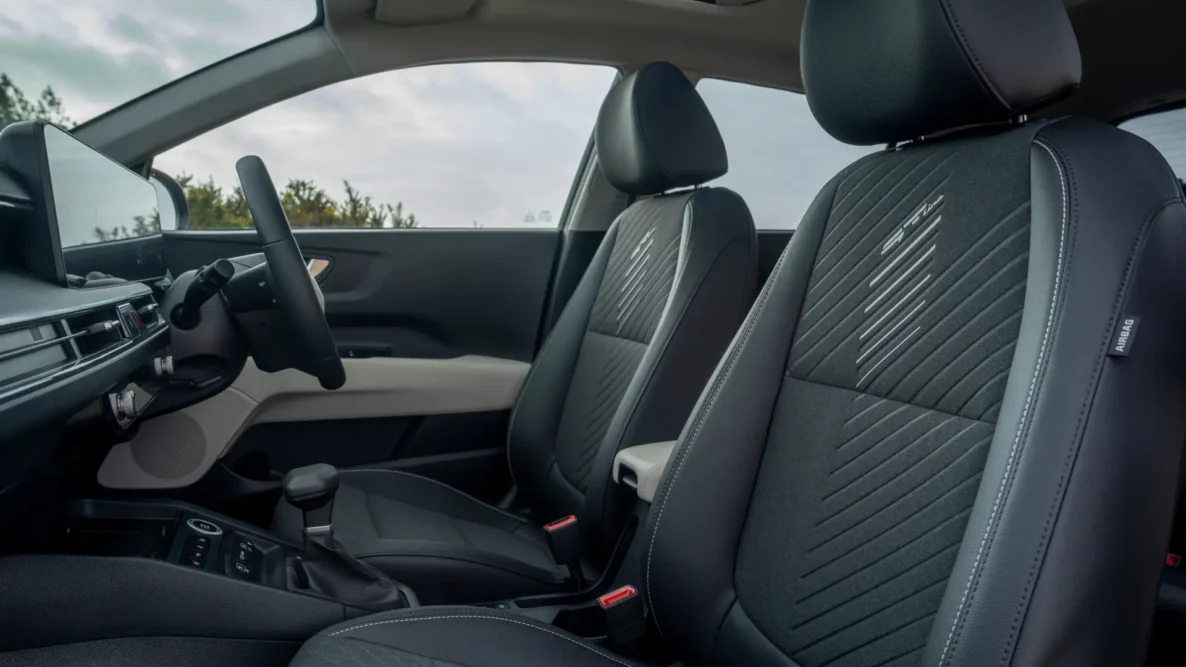
Material quality is less impressive. There are plenty of hard plastics, and nobody will confuse the dashboard with something removed from a Lexus. Even so, it all feels solidly assembled, and all the controls are well-damped.
That’s important, as while the Stonic may not feel luxurious, it doesn’t feel cheap.
Our GT-Line S was generously equipped, with heated front seats, a heated steering wheel, keyless entry, a sunroof, wireless phone charging, ambient lighting, front and rear parking sensors, adaptive cruise control and Highway Driving Assist, but you do pay handsomely for that.
Fitted with the 113bhp mild-hybrid petrol engine and seven-speed dual-clutch automatic gearbox, and finished in Adventurous Green, it cost £28,695. You can save almost £7,000 by opting for the entry-level Pure model.
Effortless, rather than exciting
The 1.0-litre three-cylinder engine produces 113bhp and 200Nm, which is enough to take the Stonic from zero to 62mph in 10.8 seconds. That’s entirely adequate, although nobody is going to emerge from a slip road clutching the steering wheel and whispering, “What a machine!”
The engine is quiet enough during normal driving and the seven-speed automatic suits the car well. There can occasionally be a brief pause when pulling away, but once moving it shifts smoothly and rarely draws attention to itself.
There’s very little feedback from the extremely light steering, but it makes the Stonic wonderfully easy to place. Parking is laughably simple, helped by the car’s compact dimensions, reversing camera and sensors. Tight city streets, narrow lanes and awkward multistoreys become things that simply happen without you noticing.

Find a sinewy country road, and the steering is a little vague and the handling a tad unexciting. There’s enough grip, body movement is controlled nicely, and the car feels light on its feet, but push harder and rivals such as the Ford Puma and Seat Arona are more entertaining. The Kia remains tidy and predictable, but expecting more misses the point. The Stonic isn’t pretending to be a hot hatch, designed instead to make everyday driving easy.
The ride on the 17-inch wheels fitted to our GT-Line S model is a little firm, thumping over sharper imperfections but also coping with general undulations. It’s an interesting compromise, and I can’t help but think it’ll be better resolved on the smaller 16-inch wheels of the Pure spec cars.
Small outside, and, well, small inside
The Stonic’s modest size is both its biggest advantage and its most obvious limitation. There’s plenty of room up front, and two adults will be comfortable, but rear accommodation is less generous, particularly for taller passengers. Three adults across the back would require close friendships, flexibility or a relatively short journey.
The boot holds 352 litres of stuff, which is enough for the weekly shopping or a modest weekend away, but it is one of the smallest boots in the class. The Ford Puma, Skoda Kamiq and several other rivals offer significantly more luggage room.

You notice it most when loading bulky items rather than everyday bags. The opening is useful, and unusually the parcel shelf can be tucked away neatly, but families carrying pushchairs, holiday luggage and the other 900 objects required by small children will soon find its limits.
Equally, that same compact footprint is why the Stonic is so easy in town. You can’t have a huge boot without eventually making the outside huge too.
Cheap to run, less so to buy
Official combined economy for our mild-hybrid automatic is 50.4mpg, with real-world figures generally landing in the mid-40s — I managed 46.3mpg over a few hundred miles of everyday driving. Drive gently, and 50mpg should be a possibility rather than pure laboratory fiction.
Servicing is every 12 months or 10,000 miles, and Kia’s seven-year or 100,000-mile warranty remains one of the Stonic’s strongest selling points.
It needs to, as the £28,695 this GT-Line S costs isn’t exactly cheap. It feels well equipped for the money, but spending almost £29,000 on such a small car requires a certain commitment to heated steering wheels and twin-screen dashboards.
The cheaper versions make more rational sense, and the Pure leaves almost £7,000 in your pocket for things considerably more exciting than an auto-dimming rear view mirror.
Kia Stonic verdict: In praise of the unremarkable
There are more interesting small SUVs. There are cheaper ones, roomier ones and, ultimately, more capable ones.
Yet I loved the Stonic.
It’s stylish, well built, well equipped and inexpensive to run. More importantly, it’s exceptionally easy. The steering is light, the controls make sense, the automatic gearbox gets on with its work and the compact dimensions remove much of the stress from urban driving.

You’ll almost forget you own it, but in the best possible way. There are no significant points of friction, no glaring weaknesses intruding upon every journey and no technology seemingly designed to punish you for purchasing a modern car.
The Stonic won’t thrill you, and you probably won’t spend Sunday morning taking the long route to buy milk. But it will quietly please almost everyone who drives it.
Sometimes being thoroughly competent is more than enough.
Model tested: Kia Stonic GT-Line S 1.0 T-GDi 48V
Price: £28,695
Average Joes rating: ★★★★☆

He is the founder of Huff Media, publisher of Professional Pickup, Professional Van, Average Janes, Average Joes, and CALIBRE. His work focuses primarily on light commercial vehicles, pickups, and real-world vehicle use, with much of his time spent on manufacturer launches, industry events, and long-term vehicle testing.
- Digger-engined JCB Hydromax smashes 400mph land speed record - 24 August 2026
- Nissan’s Formula E secret weapon is 6,000 miles away from the racetrack - 8 August 2026
- JOE LOVES Kia Stonic review: Forgettable, but in the best possible way - 5 August 2026