

Smartphones have been bulking up for years, so when a brand comes along offering a genuinely compact handset, it feels as rare as plugging in a USB cable the right way the first time. Enter the Asus Zenfone 10 — a pint-sized powerhouse that promises to slip easily into your pocket without compromising too much on the good stuff.
Straight out of the box, the Zenfone 10 feels oddly familiar. That’s because it looks a lot like last year’s Zenfone 9, right down to its distinctive two-camera setup and textured rear. The back is now made from a bio-based plastic, which sounds fancy but feels like a pleasantly grippy notebook cover. It’s not going to scream “luxury,” but it’ll survive a clumsy drop without shattering — a practical bonus for those like me, blessed with the ability to drop anything at any time.
Colour-wise, Asus is spoiling us this time with Starry Blue, Aurora Green, Eclipse Red, Comet Whitered, and Midnight Black options. I’m a grown adult, so I’ve got the boring black version, but the red has a charming “2000s indie band album cover” vibe, which appeals.
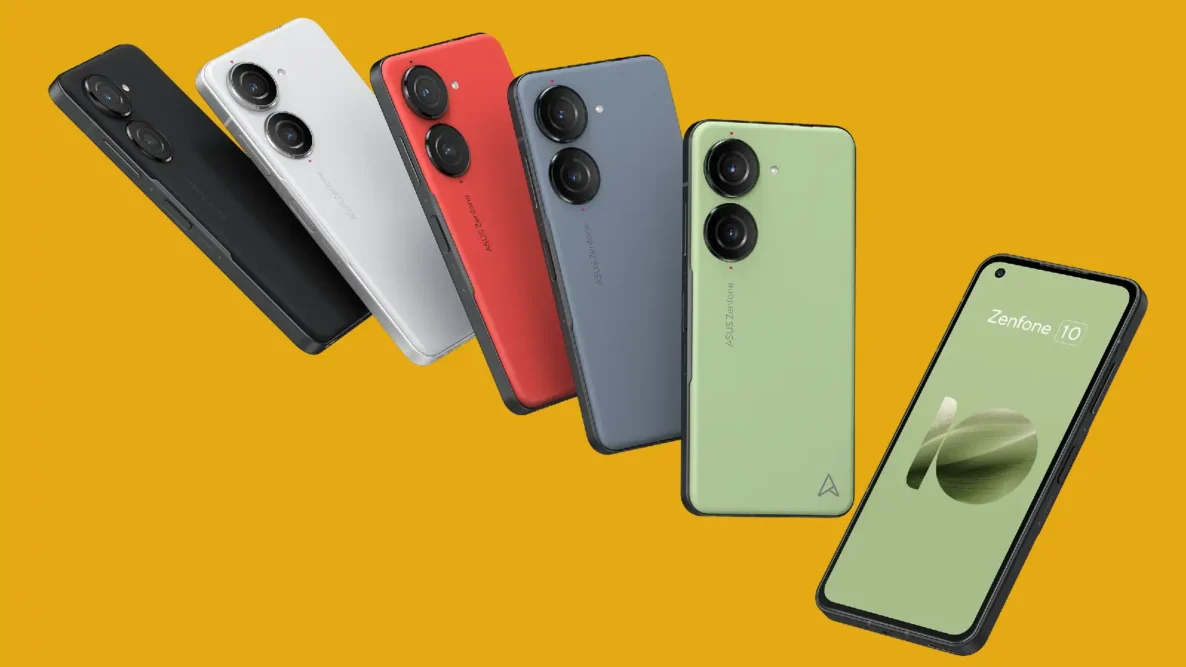
Pocket-Sized Practicality
At 5.9 inches, the Zenfone 10’s AMOLED display is one of the smallest you’ll find on a modern phone, but don’t let that fool you. The screen is crisp and colourful, with a 120Hz refresh rate that makes scrolling as smooth as silk. There’s even an option to crank it up to 144Hz for gaming, though you might struggle to spot the difference unless you’re a hardcore gamer.
Thanks to the powerful chipset powering it all, games run particularly well, with silky smooth graphics and bright, bold colours. But it’s not without its problems; at 146.5mm x 68.1mm x 9.4mm, the phone’s small size can lead to cramping hands or at least slightly sore fingers. It also means a lot of the screen real estate is covered with your fingers, making it feel a little old-fashioned despite the incredible performance.
As good as the screen is for gaming, size aside, it doesn’t get quite bright enough on the sunniest of days. Maximum brightness reaches 1,110 nits, which is a long way short of the Samsung Galaxy S23’s 1,750 nits output. Prepare for some squinting if you’re checking your messages outdoors.
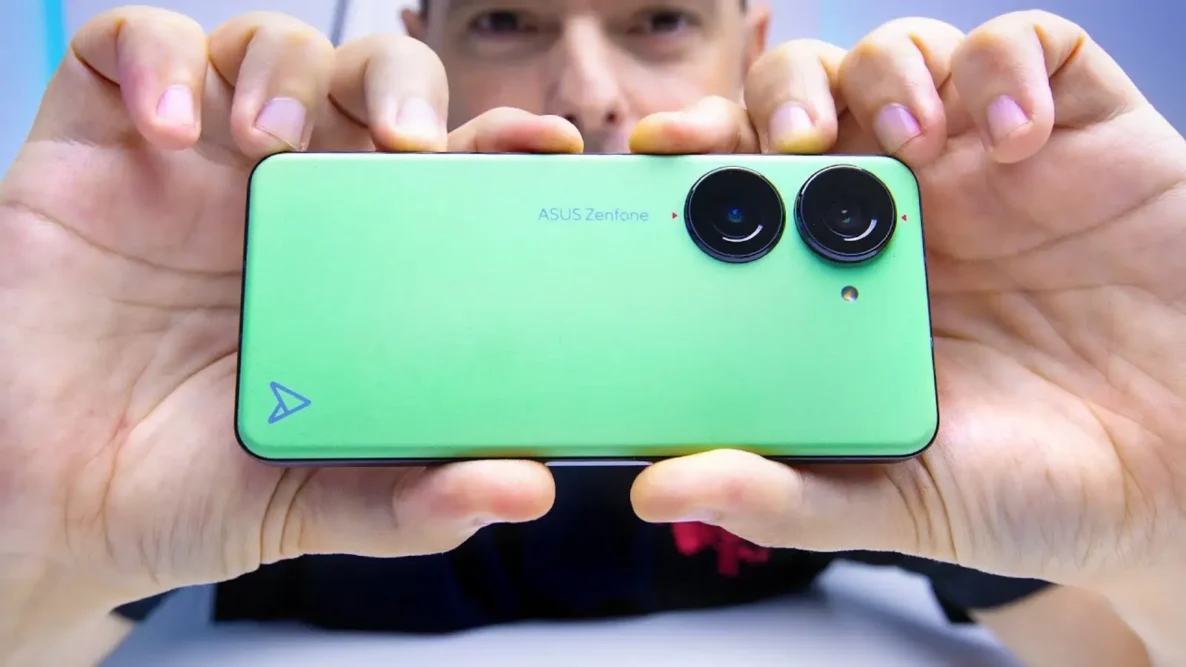
Big Performance in a Small Package
Under the hood, the Zenfone 10 packs a Snapdragon 8 Gen 2 chip, one of the fastest processors out there, and the same as you’ll find in the Galaxy S23. In tests, the Zenfone 10 outperformed the Galaxy S23 by a small margin, but it feels faster thanks to the incredibly quick screen updates. Everyday tasks like messaging, browsing, and social scrolling are handled with ease, and even graphics-heavy games don’t make the phone break a sweat — at least, not for a while. After a long session, the phone can run a bit hot, but that’s par for the course with these high-powered chips.
RAM options start at 8GB, with internal storage starting at 256GB. For an extra £70, you can double both of those, giving you plenty of room for apps, games, photos, and those “just in case” screenshots. There’s no microSD card slot, though, so choose your storage size wisely, as you won’t be able to upgrade it later.
Battery Life That Punches Above Its Weight
Small phones often mean small batteries, but the Zenfone 10’s 4,300mAh battery — bigger than the Samsung’s 3,900mAh and on par with the Google Pixel 7’s battery — holds its own surprisingly well. On a typical day, I easily lasted until the end of the day, with around 35% left in the tank after a typical day’s use. Light users might even get through a second day before needing a charge.
When it’s time to top up, the Zenfone 10 offers 30W wired charging — not exactly lightning-fast compared to some Android rivals, but still decent and ahead of the Samsung’s 15W. More excitingly, the Zenfone 10 finally adds 15W wireless charging, so you can casually plop it on a pad and walk away without fiddling with cables.
Cameras: Steady, But Not Sensational
The Zenfone 10’s primary camera is a 50MP Sony sensor with a clever six-axis gimbal stabiliser designed to keep your photos and videos smooth even if your hands aren’t. And it does — to a point. Take a look at these shots taken in Las Vegas, and you can see that, with good lighting, photos come out crisp and vibrant, though the colours can be oversaturated. Low-light shots are solid, though moving subjects can blur. Do bear in mind that our site does compress the images, so the real things are clearer.




There’s also a 13MP ultrawide lens, but it lacks the polish of the main camera and has some noticeable softness around the edges. Selfie lovers, however, will be pleased with the upgraded 32MP front camera — excellent for capturing those “look at my coffee” snaps with flattering detail.
The Little Things That Matter
If you still mourn the loss of headphone jacks, rejoice — the Zenfone 10 has kept its 3.5mm port firmly in place. It is one of the few premium phones that still offers this, alongside reliable Bluetooth for your wireless buds.
On the software front, Asus offers a clean take on Android 13. You can stick with stock Android or opt for some of Asus’s light customisations, like handy gesture controls via the side-mounted fingerprint sensor. It’s simple, intuitive, and refreshingly bloat-free.
Asus Zenfone 10: A Small Wonder With Some Quirks
The Asus Zenfone 10 is a standout choice for anyone who wants a small, stylish, and surprisingly powerful phone. It’s not perfect — the screen struggles in bright light, the ultrawide camera isn’t stellar, and the price (starting at around £750) nudges into premium territory. But if pocket-friendly size, solid performance, and a headphone jack are your priorities, this might just be your perfect match.
After all, in a world of ever-growing smartphones, the Zenfone 10 dares to stay small — and that’s something to celebrate.
Tested: Asus Zenfone 10
Price: £750–£820
Average Joes Rating: ★★★★☆

He is the founder of Huff Media, publisher of Professional Pickup, Professional Van, Average Janes, Average Joes, and CALIBRE. His work focuses primarily on light commercial vehicles, pickups, and real-world vehicle use, with much of his time spent on manufacturer launches, industry events, and long-term vehicle testing.